


- Afhalen na 1 uur in een winkel met voorraad
- Gratis thuislevering in België vanaf € 30
- Ruim aanbod met 7 miljoen producten
- Afhalen na 1 uur in een winkel met voorraad
- Gratis thuislevering in België vanaf € 30
- Ruim aanbod met 7 miljoen producten





€ 220,45
+ 440 punten
Uitvoering
Omschrijving
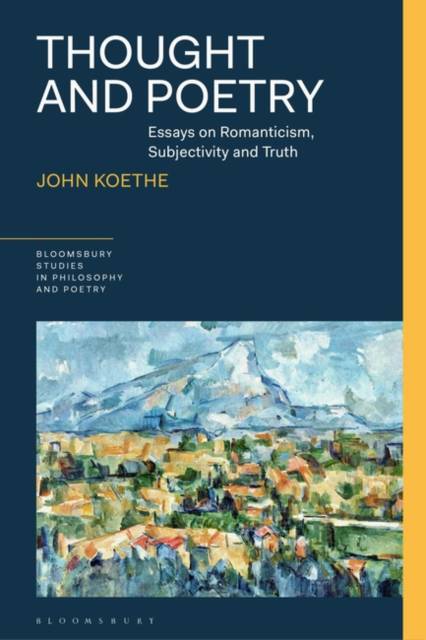
Addressing objective and subjective views of the self and the world in philosophy and poetry, this collection brings together a chronology of John Koethe's thoughts on the connections between the two forms and makes a significant contribution to unsettling the oppositions that separate them.
The essays traverse the philosophical conception of the self in modern poetry and locate connections between poets including William Wordsworth, Wallace Stevens, and John Ashbery alongside philosophers including Kant, Schopenhauer, and Wittgenstein. Koethe pays special attention to romantic poetry and notions of the sublime, which he maps onto subjective individual experience and the objective perspective on the natural world. Koethe further explores this theme in a new essay on romanticism and the sublime in relation to the mind-body problem. Using an associative and impressionistic style to write philosophically about poetry, Koethe defends his own approach that such writing cannot and should not aim for the rigor of philosophical argumentation.Specificaties
Betrokkenen
- Auteur(s):
- Uitgeverij:
Inhoud
- Aantal bladzijden:
- 210
- Taal:
- Engels
- Reeks:
Eigenschappen
- Productcode (EAN):
- 9781350262447
- Verschijningsdatum:
- 21/04/2022
- Uitvoering:
- Hardcover
- Formaat:
- Genaaid
- Afmetingen:
- 156 mm x 234 mm
- Gewicht:
- 476 g


Alleen bij Standaard Boekhandel
+ 440 punten op je klantenkaart van Standaard Boekhandel
CADEAU

AANGERADEN


Beoordelingen
We publiceren alleen reviews die voldoen aan de voorwaarden voor reviews. Bekijk onze voorwaarden voor reviews.