


- Afhalen na 1 uur in een winkel met voorraad
- Gratis thuislevering in België vanaf € 30
- Ruim aanbod met 7 miljoen producten
- Afhalen na 1 uur in een winkel met voorraad
- Gratis thuislevering in België vanaf € 30
- Ruim aanbod met 7 miljoen producten





€ 322,45
+ 644 punten
Omschrijving
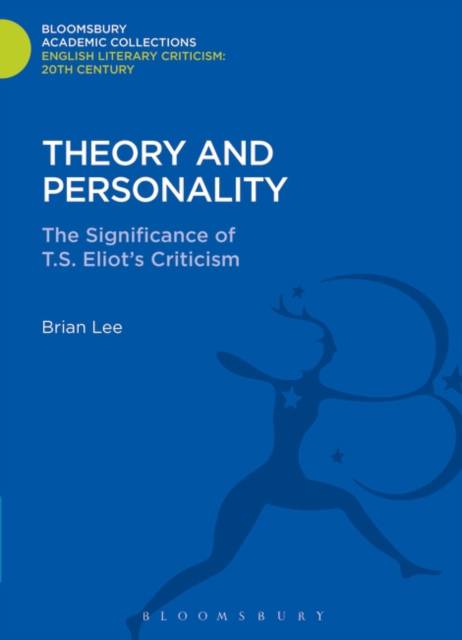
T. S. Eliot's literary criticism is often described as 'the criticism of a poet'. Mr Lee asks what happens if we take that description seriously and read the criticism as if it was as much the expression of the man, it its way, as the poetry; continuous with the poetry and the preoccupations of the poetry. This essay in interpretation is an attempt to follow out such a programme and to account for the contradictions and seemingly discrepant utterances that Eliot himself left unexplained. The opening chapter offers an outline of Eliot's main 'theories' and the connection between them, and subsequent chapters deal with critical approaches to Eliot; 'Tradition and the Individual Talent' and impersonality; Eliot's ideas on personality; and the relation between individual personality and society.
Specificaties
Betrokkenen
- Auteur(s):
- Uitgeverij:
Inhoud
- Aantal bladzijden:
- 148
- Taal:
- Engels
- Reeks:
Eigenschappen
- Productcode (EAN):
- 9781472513700
- Verschijningsdatum:
- 8/05/2014
- Uitvoering:
- Hardcover
- Formaat:
- Genaaid
- Afmetingen:
- 156 mm x 234 mm
- Gewicht:
- 412 g


Alleen bij Standaard Boekhandel
+ 644 punten op je klantenkaart van Standaard Boekhandel
Cadeau

AANGERADEN


Beoordelingen
We publiceren alleen reviews die voldoen aan de voorwaarden voor reviews. Bekijk onze voorwaarden voor reviews.