


- Afhalen na 1 uur in een winkel met voorraad
- Gratis thuislevering in België vanaf € 30
- Ruim aanbod met 7 miljoen producten
- Afhalen na 1 uur in een winkel met voorraad
- Gratis thuislevering in België vanaf € 30
- Ruim aanbod met 7 miljoen producten





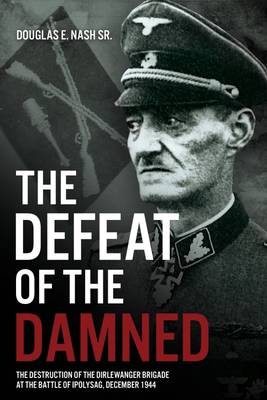
The Defeat of the Damned
The Destruction of the Dirlewanger Brigade at the Battle of Ipolysag, December 1944
Douglas E Nash
Hardcover | Engels
€ 41,95
+ 83 punten
Omschrijving
"Doug Nash addresses a crucial pe-riod of December 1944... This latest of his works, which all stand on their own merits, is the best read to date." -- Marine Corps Gazette
One of the most notorious yet least understood body of troops that fought for the Third Reich during World War II was the infamous Sondereinheit Dirlewanger, or the "Dirlewanger Special Unit." Formed initially as a company-sized formation in June 1940 from convicted poachers, it served under the command of SS-Obersturmführer Oskar Dirlewanger, one of the most infamous criminals in military history. First used to guard the Jewish ghetto in Lublin and support security operations carried out in occupied Poland by SS and Police forces, the unit was soon transferred to Belarus to combat the increasingly active Soviet partisan movement. After assisting in putting down the Warsaw Uprising during August-September 1944, by November of that year it had been enlarged and retitled as the 2. SS-Sturmbrigade Dirlewanger. One month later, it fought one of its most controversial actions near the town of Ipolysag, Hungary, now known by its Slovak name of Sahy, between 13 and 18 December 1944. As a result of its overly hasty and haphazard deployment, lack of heavy armament, and a confusing chain of command, it was virtually destroyed by two Soviet mechanized corps.
Consequently, the Wehrmacht leadership blamed Dirlewanger and the performance of his troops for the encirclement of the Hungarian capital of Budapest during late December 1944 that led to the annihilation of its garrison two months later. The brigade's defeat at Ipolysag also led to its compulsory removal from the front lines by General der Panzertruppe Hermann Balck and its eventual shipment to a rest area where it would be completely rebuilt, so thorough was its destruction. Despite its lackluster performance, the brigade was rebuilt once again and sent to East Prussia in February 1945, but never recovered from the thrashing it received at the hands of the 6th Guards Army in December.
One of the most notorious yet least understood body of troops that fought for the Third Reich during World War II was the infamous Sondereinheit Dirlewanger, or the "Dirlewanger Special Unit." Formed initially as a company-sized formation in June 1940 from convicted poachers, it served under the command of SS-Obersturmführer Oskar Dirlewanger, one of the most infamous criminals in military history. First used to guard the Jewish ghetto in Lublin and support security operations carried out in occupied Poland by SS and Police forces, the unit was soon transferred to Belarus to combat the increasingly active Soviet partisan movement. After assisting in putting down the Warsaw Uprising during August-September 1944, by November of that year it had been enlarged and retitled as the 2. SS-Sturmbrigade Dirlewanger. One month later, it fought one of its most controversial actions near the town of Ipolysag, Hungary, now known by its Slovak name of Sahy, between 13 and 18 December 1944. As a result of its overly hasty and haphazard deployment, lack of heavy armament, and a confusing chain of command, it was virtually destroyed by two Soviet mechanized corps.
Consequently, the Wehrmacht leadership blamed Dirlewanger and the performance of his troops for the encirclement of the Hungarian capital of Budapest during late December 1944 that led to the annihilation of its garrison two months later. The brigade's defeat at Ipolysag also led to its compulsory removal from the front lines by General der Panzertruppe Hermann Balck and its eventual shipment to a rest area where it would be completely rebuilt, so thorough was its destruction. Despite its lackluster performance, the brigade was rebuilt once again and sent to East Prussia in February 1945, but never recovered from the thrashing it received at the hands of the 6th Guards Army in December.
Specificaties
Betrokkenen
- Auteur(s):
- Uitgeverij:
Inhoud
- Aantal bladzijden:
- 304
- Taal:
- Engels
Eigenschappen
- Productcode (EAN):
- 9781636242118
- Verschijningsdatum:
- 15/10/2023
- Uitvoering:
- Hardcover
- Formaat:
- Genaaid
- Afmetingen:
- 142 mm x 218 mm
- Gewicht:
- 294 g


Alleen bij Standaard Boekhandel
+ 83 punten op je klantenkaart van Standaard Boekhandel
CADEAU


Beoordelingen
We publiceren alleen reviews die voldoen aan de voorwaarden voor reviews. Bekijk onze voorwaarden voor reviews.