


- Afhalen na 1 uur in een winkel met voorraad
- Gratis thuislevering in België vanaf € 30
- Ruim aanbod met 7 miljoen producten
- Afhalen na 1 uur in een winkel met voorraad
- Gratis thuislevering in België vanaf € 30
- Ruim aanbod met 7 miljoen producten





€ 20,45
+ 40 punten
Omschrijving
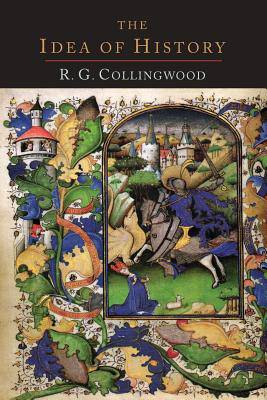
2014 Reprint of 1946 Edition. Full facsimile of the original edition, not reproduced with Optical Recognition Software. R. C. Collingwood (1889-1943) was an English philosopher and historian. Collingwood is most famous for his book "The Idea of History." The book came to be a major inspiration for philosophy of history in the English-speaking world. It is extensively cited. According to Collingwood, the science which is dedicated to the study of mind is history. Collingwood's philosophy of mind and action is thus to be found in his philosophy of history, primarily in "The Idea of History" (1946). The claim that history is the study of mind is prima facie counter-intuitive because many of us tend to think of history as a descriptive science of the past rather than as a normative science of thought. Collingwood's claim that history is the study of mind is in line with the distinction between the Naturwissenschaften and Geisteswissenschaften that is found in continental philosophy of social science.
Specificaties
Betrokkenen
- Auteur(s):
- Uitgeverij:
Inhoud
- Aantal bladzijden:
- 366
- Taal:
- Engels
Eigenschappen
- Productcode (EAN):
- 9781614275619
- Verschijningsdatum:
- 04/02/2014
- Uitvoering:
- Paperback
- Formaat:
- Trade paperback (VS)
- Afmetingen:
- 152 mm x 229 mm
- Gewicht:
- 535 g


Alleen bij Standaard Boekhandel
+ 40 punten op je klantenkaart van Standaard Boekhandel
CADEAU

AANGERADEN


Beoordelingen
We publiceren alleen reviews die voldoen aan de voorwaarden voor reviews. Bekijk onze voorwaarden voor reviews.