


- Afhalen na 1 uur in een winkel met voorraad
- Gratis thuislevering in België vanaf € 30
- Ruim aanbod met 7 miljoen producten
- Afhalen na 1 uur in een winkel met voorraad
- Gratis thuislevering in België vanaf € 30
- Ruim aanbod met 7 miljoen producten





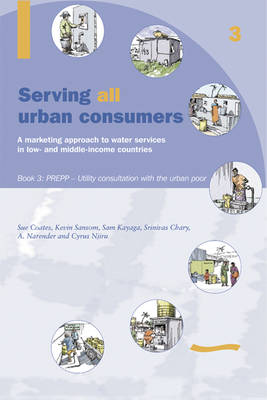
Serving All Urban Cunsumers: A Marketing Approach to Water Services in Low- And Middle-Income Countries: Book 3 Prepp
Kevin Sansom
Paperback | Engels
€ 48,45
+ 96 punten
Omschrijving
This book is one of a series of six publications that consider how water utilities working with other key stakeholders, can meet the needs and demands of urban water consumers - including the poor - through developing an understanding of the needs and demands of all consumer groups, and by the adaptation of marketing/commercial approaches. This book (Book 3) shows how a water utility or municipality can establish a dialogue with urban poor consumers to gain quality information about the services they receive and require. This is achieved through the use of a new approach called PREPP, a consumer consultation process developed primarily for this purpose. PREPP is the acronym for Participation Ranking Experience Perception Partnership. The PREPP approach was developed and jointly piloted by social scientists and engineers. It can provide good information about the experiences, perceptions and preferences of low-income consumers for a variety of viable service and payment options, which is useful for utility investment planning.
Specificaties
Betrokkenen
- Auteur(s):
- Uitgeverij:
Inhoud
- Aantal bladzijden:
- 112
- Taal:
- Engels
Eigenschappen
- Productcode (EAN):
- 9781843800569
- Verschijningsdatum:
- 15/01/2004
- Uitvoering:
- Paperback
- Formaat:
- Trade paperback (VS)
- Afmetingen:
- 210 mm x 297 mm
- Gewicht:
- 386 g


Alleen bij Standaard Boekhandel
+ 96 punten op je klantenkaart van Standaard Boekhandel
Cadeau

AANGERADEN


Beoordelingen
We publiceren alleen reviews die voldoen aan de voorwaarden voor reviews. Bekijk onze voorwaarden voor reviews.