


- Afhalen na 1 uur in een winkel met voorraad
- Gratis thuislevering in België vanaf € 30
- Ruim aanbod met 7 miljoen producten
- Afhalen na 1 uur in een winkel met voorraad
- Gratis thuislevering in België vanaf € 30
- Ruim aanbod met 7 miljoen producten





€ 30,95
+ 61 punten
Eenvoudig bestellen
Veilig betalen


Gratis thuislevering vanaf € 30 (via bpost)
Gratis levering in je Standaard Boekhandel
Omschrijving
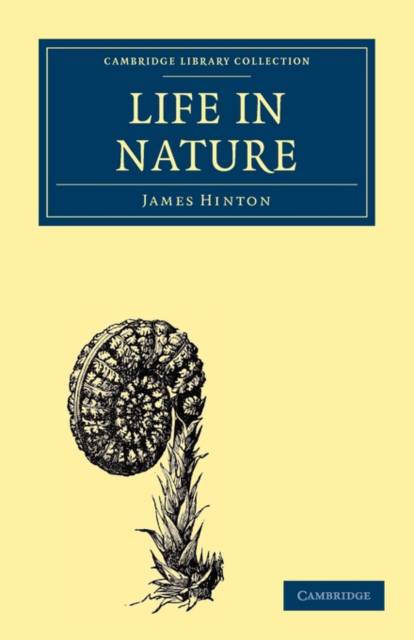
Life in Nature, first published in 1862, is a series of papers by the nineteenth-century English surgeon and popular science writer James Hinton. About a third of the material, though revised and reworked for this book, had appeared previously under the title 'Physiological Riddles' in the Cornhill Magazine, in which Hinton explained biological phenomena for non-scientific readers. Hinton wrote this thirteen-chapter book to present a concise overview of the human body, informed by the latest scientific insights, that would be more easily intelligible for the general population than the scientific physiological data of his day. His intention was also to demonstrate the similarity between patterns occurring in the organic world and in the rest of nature. This book will be of value to historians of Victorian culture and science as an example of how authors and publishers responded to the growing middle-class interest in scientific discoveries.
Specificaties
Betrokkenen
- Auteur(s):
- Uitgeverij:
Inhoud
- Aantal bladzijden:
- 280
- Taal:
- Engels
- Reeks:
Eigenschappen
- Productcode (EAN):
- 9781108000703
- Verschijningsdatum:
- 20/07/2009
- Uitvoering:
- Paperback
- Formaat:
- Trade paperback (VS)
- Afmetingen:
- 140 mm x 216 mm
- Gewicht:
- 358 g


Alleen bij Standaard Boekhandel
+ 61 punten op je klantenkaart van Standaard Boekhandel
CADEAU

AANGERADEN


Beoordelingen
We publiceren alleen reviews die voldoen aan de voorwaarden voor reviews. Bekijk onze voorwaarden voor reviews.