


- Afhalen na 1 uur in een winkel met voorraad
- Gratis thuislevering in België vanaf € 30
- Ruim aanbod met 7 miljoen producten
- Afhalen na 1 uur in een winkel met voorraad
- Gratis thuislevering in België vanaf € 30
- Ruim aanbod met 7 miljoen producten





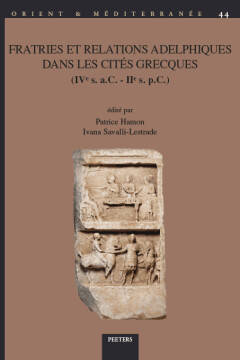
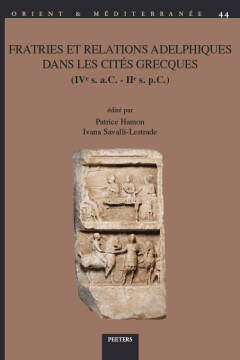
Fratries et relations adelphiques dans les cités grecques (IVe s. a.C. - IIe s. p.C.)
Hamon P
€ 85,00
+ 170 punten
Omschrijving
La suprématie politique des élites civiques aux époques hellénistique et impériale n’est plus à démontrer. Les moyens par lesquels certaines familles parvenaient à asseoir durablement leur prééminence dans le cadre spécifique des poleis grecques, majoritairement démocratiques, restent cependant insuffisamment analysés et la place de frères dans les processus de reproduction des élites n’a jamais fait l’objet d’une étude d’ensemble. Les stratégies juridiques, économiques et sociales employées pour préserver et perpétuer le capital matériel et symbolique de l’oikos révèlent en effet l’importance des solidarités entre frères ou entre frères et sœurs et la nécessaire répartition des rôles dans les fratries. En convoquant les «archives épigraphiques» des cités de plusieurs régions du monde grec (Grèce, Macédoine, Égée, Asie Mineure) et en examinant de nombreuses sources littéraires (orateurs attiques, Ménandre, Plutarque, littérature astrologique) et archéologiques (épigrammes funéraires, monuments familiaux), cet ouvrage se veut une contribution à l’histoire sociale des élites civiques au miroir des relations adelphiques.
The political supremacy of civic elites in the Hellenistic and Imperial periods is a well established fact. However, the means by which certain families succeeded in establishing their pre-eminence over the long term within the specific framework of the Greek poleis, most of which were democratic, remain insufficiently analysed, and the role of brothers in the reproduction of elites has never been the subject of a comprehensive study. The legal, economic and social strategies employed to preserve and perpetuate the material and symbolic capital of the oikos reveal the importance of solidarity between brothers or between brothers and sisters and the necessary division of roles among siblings. By drawing on the “epigraphic archives” of cities in several regions of the Greek world (Greece, Macedonia, the Aegean, Asia Minor) and examining numerous literary (Attic orators, Menander, Plutarch, astrological literature) as well as archaeological sources (funerary epigrams, family monuments), this book aims to contribute to the social history of civic elites as seen through fraternal relations.
The political supremacy of civic elites in the Hellenistic and Imperial periods is a well established fact. However, the means by which certain families succeeded in establishing their pre-eminence over the long term within the specific framework of the Greek poleis, most of which were democratic, remain insufficiently analysed, and the role of brothers in the reproduction of elites has never been the subject of a comprehensive study. The legal, economic and social strategies employed to preserve and perpetuate the material and symbolic capital of the oikos reveal the importance of solidarity between brothers or between brothers and sisters and the necessary division of roles among siblings. By drawing on the “epigraphic archives” of cities in several regions of the Greek world (Greece, Macedonia, the Aegean, Asia Minor) and examining numerous literary (Attic orators, Menander, Plutarch, astrological literature) as well as archaeological sources (funerary epigrams, family monuments), this book aims to contribute to the social history of civic elites as seen through fraternal relations.
Specificaties
Betrokkenen
- Auteur(s):
- Uitgeverij:
Inhoud
- Aantal bladzijden:
- 485
- Taal:
- Frans
- Reeks:
- Reeksnummer:
- nr. 44
Eigenschappen
- Productcode (EAN):
- 9789042952980
- Verschijningsdatum:
- 31/12/2023
- Uitvoering:
- Paperback
- Formaat:
- Trade paperback (VS)
- Afmetingen:
- 16 cm x 24 cm
- Gewicht:
- 525 kg


Alleen bij Standaard Boekhandel
+ 170 punten op je klantenkaart van Standaard Boekhandel
Cadeau

AANGERADEN


Beoordelingen
We publiceren alleen reviews die voldoen aan de voorwaarden voor reviews. Bekijk onze voorwaarden voor reviews.