


- Afhalen na 1 uur in een winkel met voorraad
- Gratis thuislevering in België vanaf € 30
- Ruim aanbod met 7 miljoen producten
- Afhalen na 1 uur in een winkel met voorraad
- Gratis thuislevering in België vanaf € 30
- Ruim aanbod met 7 miljoen producten




€ 83,95
+ 167 punten
Omschrijving
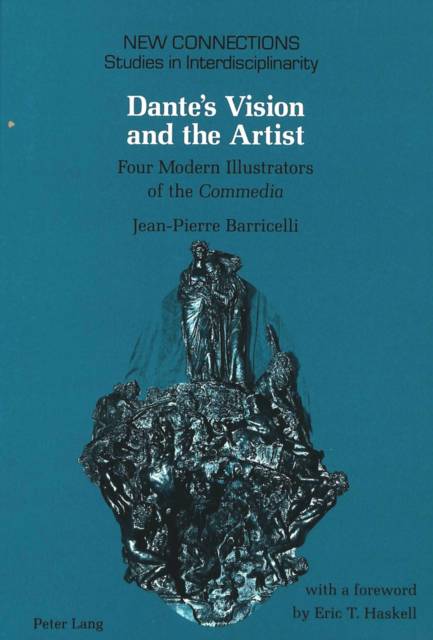
This book explores the interconnections of Dante's Divine Comedy and four modern painters: Nattini, Rauschenberg, Dalmodern painters: Nattini, Rauschenberg, Dalí, and Phillipps. It argues for Dante's painterly vision, and in this context establishes the medieval poet as a pre-Renaissance presence, pointing to his Classical, naturalistic manner of seeing, among other things, the human figure. His optic, Barricelli maintains, is so forceful that it has imposed its anatomical realism on most illustrators from the Renaissance (epitomized by Michelangelo) down to the present. The premise holds through the poetic realism of Nattini, the socio-political expressionism of Rauschenberg, the psychological surrealism and devout religiosity of Dalí, and the pictorial figurative and non-figurative art of Phillipps.
Specificaties
Betrokkenen
- Auteur(s):
- Uitgeverij:
Inhoud
- Aantal bladzijden:
- 154
- Taal:
- Engels
- Reeks:
- Reeksnummer:
- nr. 4
Eigenschappen
- Productcode (EAN):
- 9780820415581
- Verschijningsdatum:
- 1/08/1993
- Uitvoering:
- Hardcover
- Formaat:
- Genaaid
- Afmetingen:
- 262 mm x 186 mm
- Gewicht:
- 589 g


Alleen bij Standaard Boekhandel
+ 167 punten op je klantenkaart van Standaard Boekhandel
Cadeau

AANGERADEN


Beoordelingen
We publiceren alleen reviews die voldoen aan de voorwaarden voor reviews. Bekijk onze voorwaarden voor reviews.