


- Afhalen na 1 uur in een winkel met voorraad
- Gratis thuislevering in België vanaf € 30
- Ruim aanbod met 7 miljoen producten
- Afhalen na 1 uur in een winkel met voorraad
- Gratis thuislevering in België vanaf € 30
- Ruim aanbod met 7 miljoen producten





Reeksen: boeken uit de reeks Beiträge zum Organisationsverfassungsrecht - OrgVR

-
Organisationsverfassungsrecht
- Hardcover | Duits | Beiträge zum Organisationsverfassungsrecht - OrgVR
- One of the objectives of legal studies in the Berlin Republic is to rediscover the law of organisational constitutions. This volume contains interdisc... Lees meer
€ 92,95Levertermijn 1 à 4 weken€ 92,95Levertermijn 1 à 4 weken -
Paritatisches Wahlrecht
Laura Volk
- Hardcover | Duits | Beiträge zum Organisationsverfassungsrecht - OrgVR
- An equal electoral law claims to eliminate the ongoing gender inequality in parliaments. This however raises fundamental questions in regard to democr... Lees meer
€ 125,45Levertermijn 1 à 4 weken€ 125,45Levertermijn 1 à 4 weken -
Politische Parteien Und Offentlichkeit
Sven Jurgensen
- Paperback | Duits | Beiträge zum Organisationsverfassungsrecht - OrgVR
- Political parties are regularly perceived as obscurants by theory and practice. The constitution, however, grants them a legal position of democratic ... Lees meer
€ 77,95Levertermijn 1 à 4 weken€ 77,95Levertermijn 1 à 4 weken -
Gesetzgebungsoutsourcing Im Verfassungstheoretischen Kontext
Hannes Worner
- Paperback | Duits | Beiträge zum Organisationsverfassungsrecht - OrgVR
- Legislative outsourcing as the state-ordered preparation of draft laws by law firms raises legal questions that are still unresolved today. The author... Lees meer
€ 98,95Levertermijn 1 à 4 weken€ 98,95Levertermijn 1 à 4 weken -
Liquid Democracy
Anna Von Notz
- Hardcover | Duits | Beiträge zum Organisationsverfassungsrecht - OrgVR
- Anna von Notz draws attention to the potential of an intra-party Liquid Democracy. This participation concept promises a fluid transition between dire... Lees meer
€ 109,45Levertermijn 1 à 4 weken€ 109,45Levertermijn 1 à 4 weken -
Die Grundgesetzliche Theorie Der Regierung
Mathias Honer
- Paperback | Duits | Beiträge zum Organisationsverfassungsrecht - OrgVR | nr. 10
- The assignment of government to the executive obscures the independent role it plays in the constitutional system. Building on the requirements for in... Lees meer
€ 93,95Levertermijn 1 à 4 weken€ 93,95Levertermijn 1 à 4 weken -
Nach Paritat
Lea Rabe
- Paperback | Duits | Beiträge zum Organisationsverfassungsrecht - OrgVR
- Does democracy necessitate gender-equitable participation in parliament? Lea Rabe introduces new perspectives to the gridlocked debate on parity laws ... Lees meer
€ 104,45Levertermijn 1 à 4 weken€ 104,45Levertermijn 1 à 4 weken -
Wehrhafte Demokratie in der Bewährung
Isabella Friederike Gilles
- Hardcover | Duits | Beiträge zum Organisationsverfassungsrecht - OrgVR
- Isabella Friederike Gilles examines the capacity of the Federal Republic of Germany's democracy to defend itself against anti-democratic tendencies. T... Lees meer
€ 136,95Levertermijn 1 à 4 weken€ 136,95Levertermijn 1 à 4 weken -
Proportionalität im Wahlrecht
Jerome Schröder
- Paperback | Duits | Beiträge zum Organisationsverfassungsrecht - OrgVR
- The principle of electoral equality requires equality of the success value of all votes regardless of the electoral system. Using this standard and dr... Lees meer
€ 88,45Levertermijn 1 à 4 weken€ 88,45Levertermijn 1 à 4 weken -
Innerparteiliche Wettbewerbsdemokratie
Jacob Ulrich
- Paperback | Duits | Beiträge zum Organisationsverfassungsrecht - OrgVR
- Innerparteiliche Demokratie ist innerparteiliche Wettbewerbsdemokratie. Die grundgesetzliche Demokratie kann als System wettbewerblicher Interessenagg... Lees meer
€ 83,45Levertermijn 1 à 4 weken€ 83,45Levertermijn 1 à 4 weken -
Demokratische Intermediäre
Jan Keesen
- Paperback | Duits | Beiträge zum Organisationsverfassungsrecht - OrgVR
- According to the Basic Law, political parties participate in the formation of political will, even though other political associations also contribute... Lees meer
€ 89,45Levertermijn 1 à 4 weken€ 89,45Levertermijn 1 à 4 weken -
Wahlprufung VOR Der Wahl
Johanna Werpers
- Paperback | Duits | Beiträge zum Organisationsverfassungsrecht - OrgVR
- The relevant norm in German electoral review law, Article 41 of the Basic Law, does not prescribe a focus on the subsequent scrutiny of an election. N... Lees meer
€ 83,45Levertermijn 1 à 4 weken€ 83,45Levertermijn 1 à 4 weken -
Der Verfassungsgrundsatz Effektiver Parlamentarischer Opposition
David Kuhn
- Hardcover | Duits | Beiträge zum Organisationsverfassungsrecht - OrgVR
- A democracy without opposition is practically unthinkable. So why is there still discord among German legal scholars about the specific status of poli... Lees meer
€ 109,45Levertermijn 1 à 4 weken€ 109,45Levertermijn 1 à 4 weken -
Die Minderheitsregierung Im Regierungssystem Des Grundgesetzes
Lea Bosch
- Paperback | Duits | Beiträge zum Organisationsverfassungsrecht - OrgVR
- The fragmentation and polarization of the party landscape make governing by a minority government more likely. Lea Bosch examines minority governments... Lees meer
€ 88,45Levertermijn 1 à 4 weken€ 88,45Levertermijn 1 à 4 weken -
Die Organisationsverfassung Der Regierung
- Hardcover | Duits | Beiträge zum Organisationsverfassungsrecht - OrgVR
- The foundations of governmental organisation in Germany hail from the 1960s and 70s. Globalisation, European integration, and digitalisation call for ... Lees meer
€ 97,95Levertermijn 1 à 4 weken€ 97,95Levertermijn 1 à 4 weken -
Mehrheit/Minderheit
- Hardcover | Duits | Beiträge zum Organisationsverfassungsrecht - OrgVR
- With majority rule as the key feature of modern democracy, majority and minority are essential variables of any democratic institutional and electoral... Lees meer
€ 93,95Levertermijn 1 à 4 weken€ 93,95Levertermijn 1 à 4 weken -
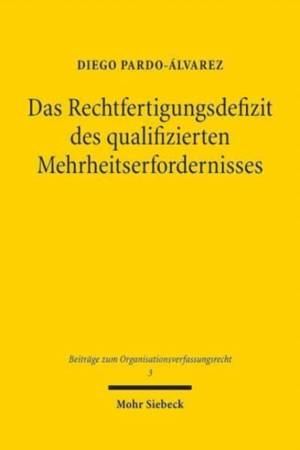
Das Rechtfertigungsdefizit Des Qualifizierten Mehrheitserfordernisses
Diego Pardo-Aulvarez
- Paperback | Duits | Beiträge zum Organisationsverfassungsrecht - OrgVR
- How can supermajorities be justified when they imply that a parliamentary minority is granted a veto right? This question can only be comprehensively ... Lees meer
€ 83,45Levertermijn 1 à 4 weken€ 83,45Levertermijn 1 à 4 weken -
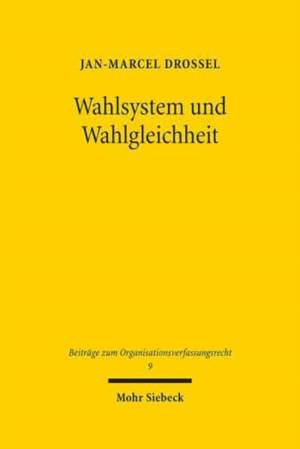
Wahlsystem Und Wahlgleichheit
Jan-Marcel Drossel
- Hardcover | Duits | Beiträge zum Organisationsverfassungsrecht - OrgVR
- The electoral system is of decisive importance in a democracy because questions of electoral law are questions of power. Jan-Marcel Drossel examines t... Lees meer
€ 109,45Levertermijn 1 à 4 weken€ 109,45Levertermijn 1 à 4 weken -
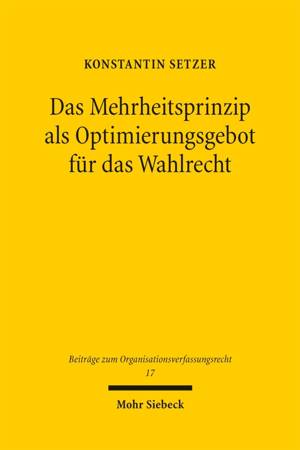
Das Mehrheitsprinzip ALS Optimierungsgebot Fur Das Wahlrecht
Konstantin Setzer
- Hardcover | Duits | Beiträge zum Organisationsverfassungsrecht - OrgVR
- While a constituency representative could enter parliament with twenty percent of the votes, a further ballot would be necessary in a mayoral election... Lees meer
€ 125,45Levertermijn 1 à 4 weken€ 125,45Levertermijn 1 à 4 weken
19 van 19 resultaten getoond