



Bedankt voor het vertrouwen het afgelopen jaar! Om jou te bedanken bieden we GRATIS verzending (in België) aan op alles gedurende de hele maand januari.
- Afhalen na 1 uur in een winkel met voorraad
- In januari gratis thuislevering in België
- Ruim aanbod met 7 miljoen producten
Bedankt voor het vertrouwen het afgelopen jaar! Om jou te bedanken bieden we GRATIS verzending (in België) aan op alles gedurende de hele maand januari.
- Afhalen na 1 uur in een winkel met voorraad
- In januari gratis thuislevering in België
- Ruim aanbod met 7 miljoen producten





€ 67,95
+ 135 punten
Uitvoering
Omschrijving
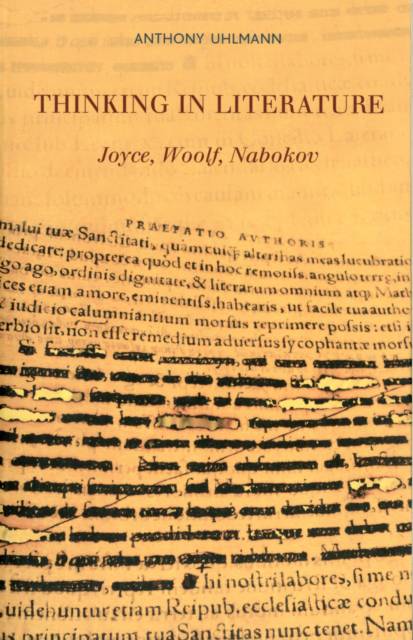
Thinking in Literature examines how the Modernist novel might be understood as a machine for thinking, and how it offers means of coming to terms with what it means to think. It begins with a theoretical analysis, via Deleuze, Spinoza and Leibniz, of the concept of thinking in literature, and sets out three principle elements which continually announce themselves as crucial to the process of developing an aesthetic expression: relation; sensation; and composition. Uhlmann then examines the aesthetic practice of three major Modernist writers: James Joyce, Virginia Woolf, and Vladimir Nabokov. Each can be understood as working with relation, sensation and composition, yet each emphasize the interrelations between them in differing ways in expressing the potentials for thinking in literature.
Specificaties
Betrokkenen
- Auteur(s):
- Uitgeverij:
Inhoud
- Aantal bladzijden:
- 176
- Taal:
- Engels
Eigenschappen
- Productcode (EAN):
- 9781441140562
- Verschijningsdatum:
- 28/07/2011
- Uitvoering:
- Paperback
- Formaat:
- Trade paperback (VS)
- Afmetingen:
- 137 mm x 213 mm
- Gewicht:
- 226 g


Alleen bij Standaard Boekhandel
+ 135 punten op je klantenkaart van Standaard Boekhandel
SOLDEN


Beoordelingen
We publiceren alleen reviews die voldoen aan de voorwaarden voor reviews. Bekijk onze voorwaarden voor reviews.