


Bedankt voor het vertrouwen het afgelopen jaar! Om jou te bedanken bieden we GRATIS verzending (in België) aan op alles gedurende de hele maand januari.
- Afhalen na 1 uur in een winkel met voorraad
- In januari gratis thuislevering in België
- Ruim aanbod met 7 miljoen producten
Bedankt voor het vertrouwen het afgelopen jaar! Om jou te bedanken bieden we GRATIS verzending (in België) aan op alles gedurende de hele maand januari.
- Afhalen na 1 uur in een winkel met voorraad
- In januari gratis thuislevering in België
- Ruim aanbod met 7 miljoen producten





€ 18,45
+ 36 punten
Uitvoering
Omschrijving
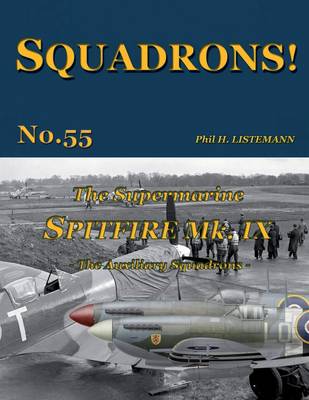
The Spitfire Mk.IX is one of the best known versions of the Spitfire. However, it should never really have existed. Its creation can be attributed to the appearance of the Focke-Wulf Fw190 over western Europe at the end of 1941. Royal Air Force pilots were quick to state the Spitfire Mk.V, the frontline RAF fighter at the time in Great Britain, was outclassed in many aspects by the new German fighter. The RAF, therefore, had to urgently find a solution to improve the Spitfire and with a new Merlin engine, the Spitfire Mk IX was born. The Mk.IX was produced for almost three years and would become one of the main fighters and fighter-bombers of the RAF in Europe in 1944 and 1945. In total, during the Second World War more than 100 fighter units were totally or partially equipped with the Spitfire. Among them, there were four Auxiliary Air Force squadrons which flew the Mk IX with the Fighter Command or/and the 2 TAF (501, 504, 602 and 611) and a fifth in Italy (601). Illustrated with 45 photographs and 9 colour profiles.
Specificaties
Betrokkenen
- Auteur(s):
- Uitgeverij:
Inhoud
- Aantal bladzijden:
- 56
- Taal:
- Engels
- Reeks:
- Reeksnummer:
- nr. 55
Eigenschappen
- Productcode (EAN):
- 9791096490943
- Verschijningsdatum:
- 12/09/2022
- Uitvoering:
- Paperback
- Formaat:
- Trade paperback (VS)
- Afmetingen:
- 216 mm x 279 mm
- Gewicht:
- 204 g


Alleen bij Standaard Boekhandel
+ 36 punten op je klantenkaart van Standaard Boekhandel
SOLDEN


Beoordelingen
We publiceren alleen reviews die voldoen aan de voorwaarden voor reviews. Bekijk onze voorwaarden voor reviews.