


- Afhalen na 1 uur in een winkel met voorraad
- Gratis thuislevering in België vanaf € 30
- Ruim aanbod met 7 miljoen producten
- Afhalen na 1 uur in een winkel met voorraad
- Gratis thuislevering in België vanaf € 30
- Ruim aanbod met 7 miljoen producten





€ 291,50
+ 583 punten
Omschrijving
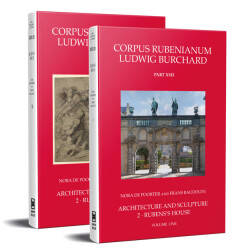
The house that Rubens built a few years after his return to Antwerp from Italy, and where he lived to the end of his life, was for the most part lost during the course of alterations carried out over the years. Two original parts survive, and they attest to the grandeur of the artist's house: the portico and garden pavilion. When the house came to be reconstructed in 1938-1946 a great many unsolved questions had to be tackled, but eventually the difficult project was concluded successfully, although the result sometimes departs from what is historically correct. The reconstructed house became a popular museum. Undoubtedly the house, which included the family's living quarters and contained Rubens's much admired art collection as well as his famous studio, was built according to the master's own ideas. It is thus part of Rubens's oeuvre and forms the subject of this catalogue raisonne. Regrettably almost nothing survives of Rubens's designs which certainly must have existed. The present volume is the result of a quest to gather together and critically assess all authentic architectonic elements and written, pictorial and archaeological sources. This allows us to form an impression of the appearance of Rubens's unique house as well as the functions of its various parts. In addition, the sources which the pictor doctus Rubens used for inspiration in his design are discussed at length: architectural treatises, ancient art as well as the Renaissance architecture he had come to know during his stay in Italy.
Specificaties
Betrokkenen
- Auteur(s):
- Uitgeverij:
Inhoud
- Aantal bladzijden:
- 704
- Taal:
- Engels
- Reeks:
Eigenschappen
- Productcode (EAN):
- 9781912554645
- Verschijningsdatum:
- 17/11/2022
- Uitvoering:
- Hardcover
- Formaat:
- Genaaid
- Gewicht:
- 3987 g


Alleen bij Standaard Boekhandel
+ 583 punten op je klantenkaart van Standaard Boekhandel
Cadeau

AANGERADEN


Beoordelingen
We publiceren alleen reviews die voldoen aan de voorwaarden voor reviews. Bekijk onze voorwaarden voor reviews.