


- Afhalen na 1 uur in een winkel met voorraad
- Gratis thuislevering in België vanaf € 30
- Ruim aanbod met 7 miljoen producten
- Afhalen na 1 uur in een winkel met voorraad
- Gratis thuislevering in België vanaf € 30
- Ruim aanbod met 7 miljoen producten





€ 415,95
+ 831 punten
Uitvoering
Omschrijving
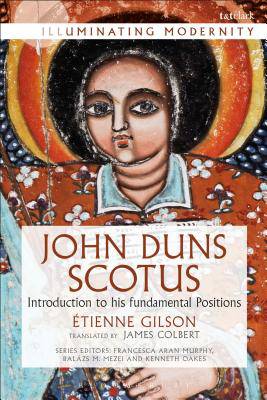
Étienne Gilson's Jean Duns Scot: Introduction À Ses Positions Fondamentales is widely understood to be one of the most important works on John Duns Scotus' texts, famous for their complexity. James Colbert's translation is the first time that Gilson's work on Scotus has been put into English, with an introduction by Trent Pomplun and an afterword by John Millbank.
Scotus contributed to the development of a metaphysical system that was compatible with Christian doctrine, an epistemology that altered the 13th century understanding of human knowledge, and a theology that stressed both divine and human will. Gilson, in turn, offers a thoroughly comprehensive introduction to the fundamental positions that Scotus stood for. Explaining Scotus's views on metaphysics, the existence of infinite being and divine nature, the matter of the physical spiritual and angelic, intellectual knowledge and will and Scotus' relationship with other scholars, Gilson and Colbert show how deeply Scotus left a mark on discussions of such disparate topics as the semantics of religious language, the problem of universals, divine illumination, and the nature of human freedom. This work has been translated from the original work in French Jean Duns Scot. Introduction à ses positions fondamentales ((c) 1952 by Librairie Philosophique J. Vrin).Specificaties
Betrokkenen
- Auteur(s):
- Vertaler(s):
- Uitgeverij:
Inhoud
- Aantal bladzijden:
- 632
- Taal:
- Engels
- Reeks:
Eigenschappen
- Productcode (EAN):
- 9780567678683
- Verschijningsdatum:
- 27/12/2018
- Uitvoering:
- Hardcover
- Formaat:
- Genaaid
- Afmetingen:
- 157 mm x 236 mm
- Gewicht:
- 1016 g


Alleen bij Standaard Boekhandel
+ 831 punten op je klantenkaart van Standaard Boekhandel
Cadeau

AANGERADEN


Beoordelingen
We publiceren alleen reviews die voldoen aan de voorwaarden voor reviews. Bekijk onze voorwaarden voor reviews.