


- Afhalen na 1 uur in een winkel met voorraad
- Gratis thuislevering in België vanaf € 30
- Ruim aanbod met 7 miljoen producten
- Afhalen na 1 uur in een winkel met voorraad
- Gratis thuislevering in België vanaf € 30
- Ruim aanbod met 7 miljoen producten





€ 296,95
+ 593 punten
Uitvoering
Omschrijving
Talk of 'spirituality' and 'individual religion' is proliferating both in popular discourse and scholarly works. Increasingly people claim to be 'spiritual but not religious, ' or to prefer 'individual religion' to 'organized religion.' Scholars have for decades noted the phenomenon - primarily within the middle class - of individuals picking and choosing elements from among various religious traditions, forming their own religion or spirituality for themselves.
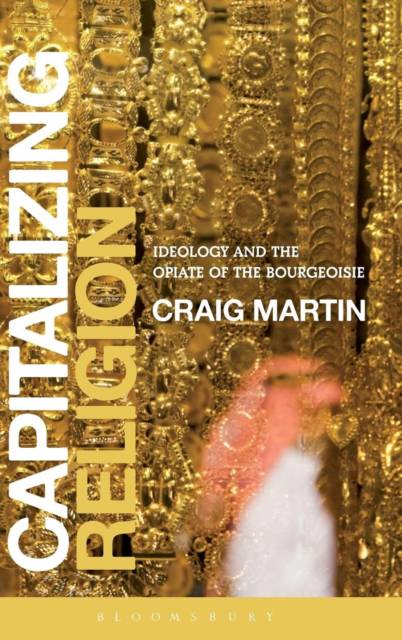
While the topics of 'spirituality' and 'individual religion' are regularly treated as self-evident by the media and even some scholars of religion, Capitalizing Religion provides one of the first critical analyses of the phenomenon, arguing that these recent forms of spirituality are in many cases linked to capitalist ideology and consumer practices. Examining cases such as Eckhart Tolle's The Power of Now, and Karen Berg's God Wears Lipstick, Craig Martin ultimately argues that so-called 'individual religion' is a religion of the status quo or, more critically, 'an opiate of the bourgeoisie.' Capitalizing Religion: Ideology and Opiate of the Bourgeoisie is a landmark publication in critical religious studies.Specificaties
Betrokkenen
- Auteur(s):
- Uitgeverij:
Inhoud
- Aantal bladzijden:
- 192
- Taal:
- Engels
Eigenschappen
- Productcode (EAN):
- 9781472521644
- Verschijningsdatum:
- 20/11/2014
- Uitvoering:
- Hardcover
- Formaat:
- Genaaid
- Afmetingen:
- 157 mm x 239 mm
- Gewicht:
- 430 g



Alleen bij Standaard Boekhandel
+ 593 punten op je klantenkaart van Standaard Boekhandel
Cadeau

AANGERADEN


Beoordelingen
We publiceren alleen reviews die voldoen aan de voorwaarden voor reviews. Bekijk onze voorwaarden voor reviews.