


- Afhalen na 1 uur in een winkel met voorraad
- Gratis thuislevering in België vanaf € 30
- Ruim aanbod met 7 miljoen producten
- Afhalen na 1 uur in een winkel met voorraad
- Gratis thuislevering in België vanaf € 30
- Ruim aanbod met 7 miljoen producten





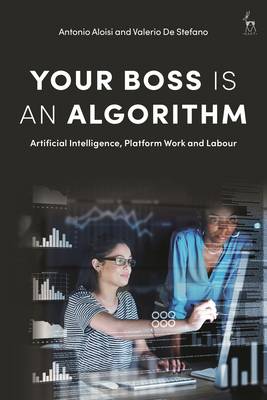
Your Boss Is an Algorithm
Artificial Intelligence, Platform Work and Labour
Antonio Aloisi, Valerio de Stefano
Hardcover | Engels
€ 169,95
+ 339 punten
Uitvoering
Omschrijving
What effect do robots, algorithms, and online platforms have on the world of work? Using case studies and examples from across the EU, the UK, and the US, this book provides a compass to navigate this technological transformation as well as the regulatory options available, and proposes a new map for the era of radical digital advancements.
From platform work to the gig-economy and the impact of artificial intelligence, algorithmic management, and digital surveillance on workplaces, technology has overwhelming consequences for everyone's lives, reshaping the labour market and straining social institutions. Contrary to preliminary analyses forecasting the threat of human work obsolescence, the book demonstrates that digital tools are more likely to replace managerial roles and intensify organisational processes in workplaces, rather than opening the way for mass job displacement.
Can flexibility and protection be reconciled so that legal frameworks uphold innovation? How can we address the pervasive power of AI-enabled monitoring? How likely is it that the gig-economy model will emerge as a new organisational paradigm across sectors? And what can social partners and political players do to adopt effective regulation?
Technology is never neutral. It can and must be governed, to ensure that progress favours the many. Digital transformation can be an essential ally, from the warehouse to the office, but it must be tested in terms of social and political sustainability, not only through the lenses of economic convenience. Your Boss Is an Algorithm offers a guide to explore these new scenarios, their promises, and perils.
From platform work to the gig-economy and the impact of artificial intelligence, algorithmic management, and digital surveillance on workplaces, technology has overwhelming consequences for everyone's lives, reshaping the labour market and straining social institutions. Contrary to preliminary analyses forecasting the threat of human work obsolescence, the book demonstrates that digital tools are more likely to replace managerial roles and intensify organisational processes in workplaces, rather than opening the way for mass job displacement.
Can flexibility and protection be reconciled so that legal frameworks uphold innovation? How can we address the pervasive power of AI-enabled monitoring? How likely is it that the gig-economy model will emerge as a new organisational paradigm across sectors? And what can social partners and political players do to adopt effective regulation?
Technology is never neutral. It can and must be governed, to ensure that progress favours the many. Digital transformation can be an essential ally, from the warehouse to the office, but it must be tested in terms of social and political sustainability, not only through the lenses of economic convenience. Your Boss Is an Algorithm offers a guide to explore these new scenarios, their promises, and perils.
Specificaties
Betrokkenen
- Auteur(s):
- Uitgeverij:
Inhoud
- Aantal bladzijden:
- 240
- Taal:
- Engels
Eigenschappen
- Productcode (EAN):
- 9781509953172
- Verschijningsdatum:
- 14/07/2022
- Uitvoering:
- Hardcover
- Formaat:
- Genaaid
- Afmetingen:
- 156 mm x 234 mm
- Gewicht:
- 458 g


Alleen bij Standaard Boekhandel
+ 339 punten op je klantenkaart van Standaard Boekhandel
AANGERADEN


Beoordelingen
We publiceren alleen reviews die voldoen aan de voorwaarden voor reviews. Bekijk onze voorwaarden voor reviews.