


- Afhalen na 1 uur in een winkel met voorraad
- Gratis thuislevering in België vanaf € 30
- Ruim aanbod met 7 miljoen producten
- Afhalen na 1 uur in een winkel met voorraad
- Gratis thuislevering in België vanaf € 30
- Ruim aanbod met 7 miljoen producten





Omschrijving
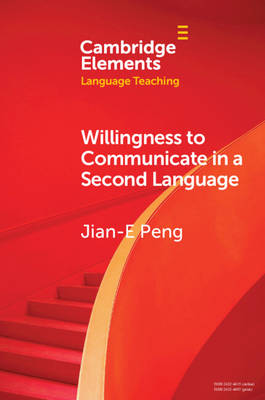
This Element offers a review of advancements in willingness to communicate (WTC) in a second language (L2) over the past twenty-five years. It begins with the origin of the concept of WTC in first language (L1) communication research and the seminal and novel conceptualizations of WTC in the L2 context. This Element then categorizes six key perspectives that have informed WTC research: social psychological, cultural, dynamic, ecological, multimodal, and digital. By analyzing representative studies, it elucidates insights gained from these perspectives. The Element then discusses key factors associated with WTC, including individual attributes, situational factors, and outcome factors. This is followed by an overview of and critical commentary on methodological approaches in WTC research. Implications for enhancing L2 learners' WTC in in-class, out-of-class, and digital contexts are discussed. The Element concludes by proposing important venues for future WTC research. This title is also available as Open Access on Cambridge Core.
Specificaties
Betrokkenen
- Auteur(s):
- Uitgeverij:
Inhoud
- Aantal bladzijden:
- 78
- Taal:
- Engels
- Reeks:
Eigenschappen
- Productcode (EAN):
- 9781009417860
- Verschijningsdatum:
- 6/02/2025
- Uitvoering:
- Paperback
- Formaat:
- Trade paperback (VS)
- Afmetingen:
- 152 mm x 229 mm
- Gewicht:
- 117 g


Alleen bij Standaard Boekhandel
+ 72 punten op je klantenkaart van Standaard Boekhandel
Cadeau

AANGERADEN


Beoordelingen
We publiceren alleen reviews die voldoen aan de voorwaarden voor reviews. Bekijk onze voorwaarden voor reviews.