


- Afhalen na 1 uur in een winkel met voorraad
- Gratis thuislevering in België vanaf € 30
- Ruim aanbod met 7 miljoen producten
- Afhalen na 1 uur in een winkel met voorraad
- Gratis thuislevering in België vanaf € 30
- Ruim aanbod met 7 miljoen producten





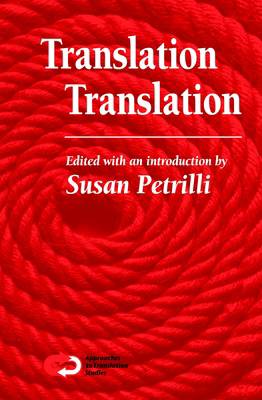
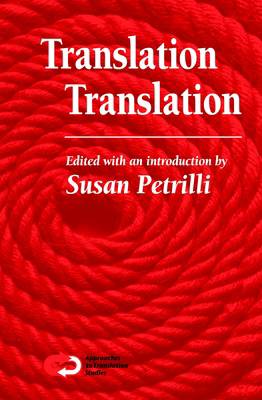
Translation Translation
Petrilli Susan
€ 137,80
+ 275 punten
Eenvoudig bestellen
Veilig betalen


Gratis thuislevering vanaf € 30 (via bpost)
Gratis levering in je Standaard Boekhandel
Omschrijving
Translation Translation contributes to current debate on the question of translation dealt with in an interdisciplinary perspective, with implications not only of a theoretical order but also of the didactic and the practical orders. In the context of globalization the question of translation is fundamental for education and responds to new community needs with reference to Europe and more extensively to the international world.
In its most obvious sense translation concerns verbal texts and their relations among different languages. However, to remain within the sphere of verbal signs, languages consist of a plurality of different languages that also relate to each other through translation processes. Moreover, translation occurs between verbal languages and nonverbal languages and among nonverbal languages without necessarily involving verbal languages. Thus far the allusion is to translation processes within the sphere of anthroposemiosis.
But translation occurs among signs and the signs implicated are those of the semiosic sphere in its totality, which are not exclusively signs of the linguistic-verbal order. Beyond anthroposemiosis, translation is a fact of life and invests the entire biosphere or biosemiosphere, as clearly evidenced by research in "biosemiotics", for where there is life there are signs, and where there are signs or semiosic processes there is translation, indeed semiosic processes are translation processes. According to this approach reflection on translation obviously cannot be restricted to the domain of linguistics but must necessarily involve semiotics, the general science or theory of signs.
In this theoretical framework essays have been included not only from major translation experts, but also from researchers working in different areas, in addition to semiotics and linguistics, also philosophy, literary criticism, cultural studies, gender studies, biology, and the medical sciences. All scholars work on problems of translation in the light of their own special competencies and interests.
In its most obvious sense translation concerns verbal texts and their relations among different languages. However, to remain within the sphere of verbal signs, languages consist of a plurality of different languages that also relate to each other through translation processes. Moreover, translation occurs between verbal languages and nonverbal languages and among nonverbal languages without necessarily involving verbal languages. Thus far the allusion is to translation processes within the sphere of anthroposemiosis.
But translation occurs among signs and the signs implicated are those of the semiosic sphere in its totality, which are not exclusively signs of the linguistic-verbal order. Beyond anthroposemiosis, translation is a fact of life and invests the entire biosphere or biosemiosphere, as clearly evidenced by research in "biosemiotics", for where there is life there are signs, and where there are signs or semiosic processes there is translation, indeed semiosic processes are translation processes. According to this approach reflection on translation obviously cannot be restricted to the domain of linguistics but must necessarily involve semiotics, the general science or theory of signs.
In this theoretical framework essays have been included not only from major translation experts, but also from researchers working in different areas, in addition to semiotics and linguistics, also philosophy, literary criticism, cultural studies, gender studies, biology, and the medical sciences. All scholars work on problems of translation in the light of their own special competencies and interests.
Specificaties
Betrokkenen
- Auteur(s):
- Uitgeverij:
Inhoud
- Aantal bladzijden:
- 660
- Taal:
- Engels
- Reeks:
- Reeksnummer:
- nr. 21
Eigenschappen
- Productcode (EAN):
- 9789042009479
- Verschijningsdatum:
- 1/01/2003
- Uitvoering:
- Hardcover
- Formaat:
- Genaaid
- Afmetingen:
- 155 mm x 235 mm
- Gewicht:
- 1215 g


Alleen bij Standaard Boekhandel
+ 275 punten op je klantenkaart van Standaard Boekhandel
CADEAU

AANGERADEN


Beoordelingen
We publiceren alleen reviews die voldoen aan de voorwaarden voor reviews. Bekijk onze voorwaarden voor reviews.