


- Afhalen na 1 uur in een winkel met voorraad
- Gratis thuislevering in België vanaf € 30
- Ruim aanbod met 7 miljoen producten
- Afhalen na 1 uur in een winkel met voorraad
- Gratis thuislevering in België vanaf € 30
- Ruim aanbod met 7 miljoen producten





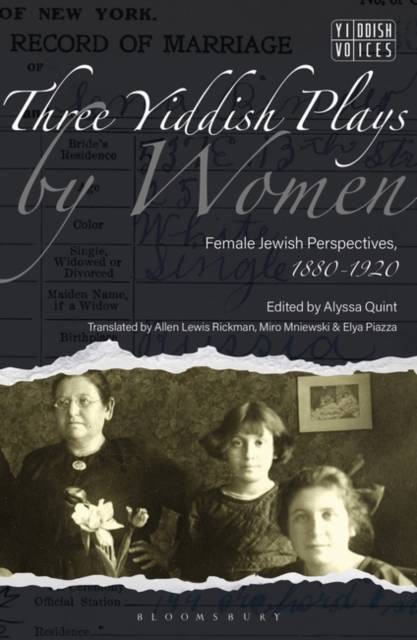
Three Yiddish Plays by Women
Female Jewish Perspectives, 1880-1920
€ 127,45
+ 254 punten
Omschrijving
This is an unprecedented collection of three newly translated Yiddish plays written by women in the period from 1880 to 1920. Taken together, these plays provide a fascinating insight into female Jewish perspectives on a range of women's issues prevalent at the time and, in some cases, still prevalent today. The works explore topics such as the Jewish law of the 'chained widow', pregnancy out of wedlock, and birth control, amongst many others.
Three Yiddish Plays by Women includes an incisive contextual introduction which provides historical context for each individual work, summaries and discussion of the texts and stage histories for two of the three that have them. The introduction offers biographical information about each playwright and looks at what ambit they were each active in, taking into consideration gender norms. It also engages an array of recent sources and angles on intersecting questions of theater and gender in a landmark volume of vital significance to students of women's history, modern Jewish history, cultural history and theatre history.Specificaties
Betrokkenen
- Uitgeverij:
Inhoud
- Aantal bladzijden:
- 280
- Taal:
- Engels
- Reeks:
Eigenschappen
- Productcode (EAN):
- 9781350321021
- Verschijningsdatum:
- 16/11/2023
- Uitvoering:
- Hardcover
- Formaat:
- Genaaid
- Afmetingen:
- 127 mm x 203 mm
- Gewicht:
- 403 g

Alleen bij Standaard Boekhandel
+ 254 punten op je klantenkaart van Standaard Boekhandel
Cadeau

AANGERADEN


Beoordelingen
We publiceren alleen reviews die voldoen aan de voorwaarden voor reviews. Bekijk onze voorwaarden voor reviews.