



Bedankt voor het vertrouwen het afgelopen jaar! Om jou te bedanken bieden we GRATIS verzending (in België) aan op alles gedurende de hele maand januari.
- Afhalen na 1 uur in een winkel met voorraad
- In januari gratis thuislevering in België
- Ruim aanbod met 7 miljoen producten
Bedankt voor het vertrouwen het afgelopen jaar! Om jou te bedanken bieden we GRATIS verzending (in België) aan op alles gedurende de hele maand januari.
- Afhalen na 1 uur in een winkel met voorraad
- In januari gratis thuislevering in België
- Ruim aanbod met 7 miljoen producten





€ 203,95
+ 407 punten
Omschrijving
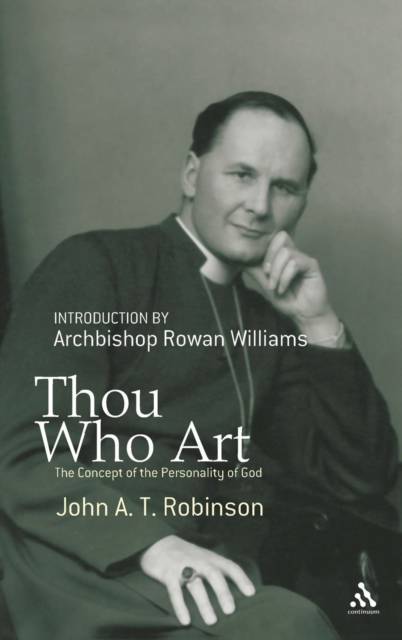
In 1960, Eric Mascall the Oxford Theologian published a book called He Who Is., a neo Thomist approach to the existence of God. This ran against all that Robinson believed most deeply about belief in God- influenced as he was by the new wave of German theologians. Bultmann, Buber but above all Dietrich Bonhoeffer. This book was his response to Mascall and hence the title . The book is about the notion of personality and its relation to Christian theology, with particular reference to the contemporary I-Thou Philosophy of Martin Buber.and its relation to the doctrine of The Trinity and the Person of Christ. This book was unquestionably the foundation of John A. T. Robinson theological work. Barth, Brunner, Berdayev, Kierkegaard, Heim and Mc Murray all had an influence on this book (as the reader will quickly observe). But at the heart of Roboinson's thinking was Buber's small but seminal volume I and Thou. More than anyone else, Robinson integrated the insights of Buber philosophy with the biblcial doctrines of God and man. It was in this way that Robinson in this book explored both the history and implications of this tradition of thought of how one could speak of personality in God rather than God as a person. In this book Robinson began to work as a theologian as he meant to go on: questuioning accepted doctrine, stripping away, getting to the heart, resinterpreting. He was in Karl Barth great phrase taking rational trouble over the mystery
Specificaties
Betrokkenen
- Auteur(s):
- Uitgeverij:
Inhoud
- Aantal bladzijden:
- 384
- Taal:
- Engels
Eigenschappen
- Productcode (EAN):
- 9780826488978
- Verschijningsdatum:
- 23/02/2006
- Uitvoering:
- Hardcover
- Formaat:
- Ongenaaid / garenloos gebonden
- Afmetingen:
- 167 mm x 237 mm
- Gewicht:
- 725 g


Alleen bij Standaard Boekhandel
+ 407 punten op je klantenkaart van Standaard Boekhandel
SOLDEN


Beoordelingen
We publiceren alleen reviews die voldoen aan de voorwaarden voor reviews. Bekijk onze voorwaarden voor reviews.