



Er zijn problemen bij het activeren van e-books. Daardoor kan het langer duren voor je aangekochte e-books beschikbaar zijn. Je ontvangt automatisch bericht van zodra dat het geval is.
- Afhalen na 1 uur in een winkel met voorraad
- In januari gratis thuislevering in België
- Ruim aanbod met 7 miljoen producten
Er zijn problemen bij het activeren van e-books. Daardoor kan het langer duren voor je aangekochte e-books beschikbaar zijn. Je ontvangt automatisch bericht van zodra dat het geval is.
- Afhalen na 1 uur in een winkel met voorraad
- In januari gratis thuislevering in België
- Ruim aanbod met 7 miljoen producten





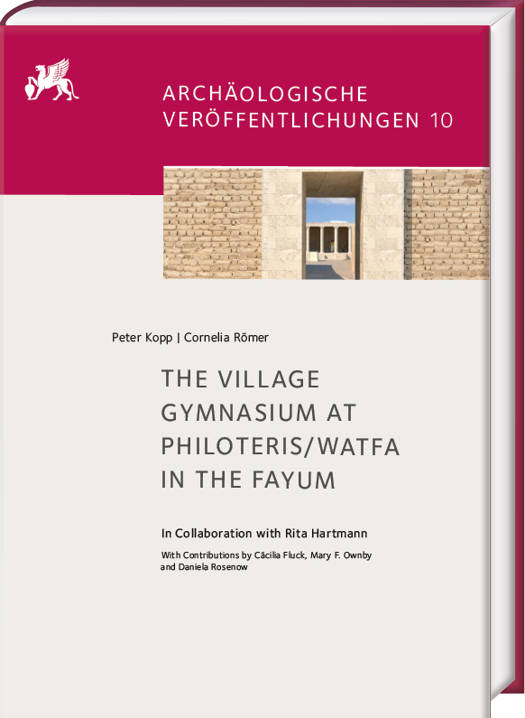
The Village Gymnasium at Philoteris/Watfa in the Fayum
In Collaboration with Rita Hartmann. with Contributions by Cacilia Fluck, Mary F. Ownby and Daniela Rosenow
Romer Cornelia, Peter Kopp
Hardcover | Engels | Archäologische Veröffentlichungen Des Deutschen Archäologischen Instituts | nr. 10
€ 76,95
Omschrijving
It has long been known, yet until now only from textual sources, that gymnasia had been established throughout Egypt in the places where the first Ptolemaic kings had settled Hellenic soldiers during the 3rd century BC. Particularly in the Fayum Oasis, thousands of people from across the Hellenized Mediterranean region came together. Apparently, many in these villages wanted to emphasize their cultural background by privately founding and funding gymnasia. The majority of the population, mainly comprising indigenous Egyptians, was presumably excluded from membership in these club-like institutions. The gymnasium excavated in the ancient village of Philoteris in the Fayum Oasis is the first building of its kind to be archaeologically documented in Egypt and abandoned when Roman rule in the 1st century BC restricted gymnasia to the large cities. It is thus unique and provides a new and deeper insight into one aspect of the communal life of Egyptian settlers and Hellenized immigrants in Egypt in the 3rd century BC to the Roman Period. The building construction consists of a central courtyard with surrounding structures, including a large assembly hall, a dining room, and probably at least one small lecture hall. The complex is surrounded by a mud brick wall and was entered through a limestone gate, giving the gymnasium the appearance of an Egyptian temple from the outside. Next to it was the racecourse, which was the equivalent of the Olympic stadium at over 180 meters in length. All of this was within sight of the village, but distinctly separated from it by a large canal.
Specificaties
Betrokkenen
- Auteur(s):
- Uitgeverij:
Inhoud
- Aantal bladzijden:
- 158
- Taal:
- Engels
- Reeks:
- Reeksnummer:
- nr. 10
Eigenschappen
- Productcode (EAN):
- 9783447123532
- Verschijningsdatum:
- 18/06/2025
- Uitvoering:
- Hardcover
- Formaat:
- Genaaid
- Afmetingen:
- 180 mm x 50 mm
- Gewicht:
- 521 g


Alleen bij Standaard Boekhandel
Cadeau

AANGERADEN


Beoordelingen
We publiceren alleen reviews die voldoen aan de voorwaarden voor reviews. Bekijk onze voorwaarden voor reviews.