


- Afhalen na 1 uur in een winkel met voorraad
- Gratis thuislevering in België vanaf € 30
- Ruim aanbod met 7 miljoen producten
- Afhalen na 1 uur in een winkel met voorraad
- Gratis thuislevering in België vanaf € 30
- Ruim aanbod met 7 miljoen producten





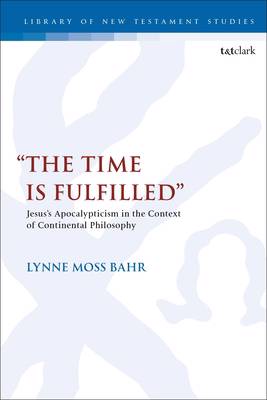
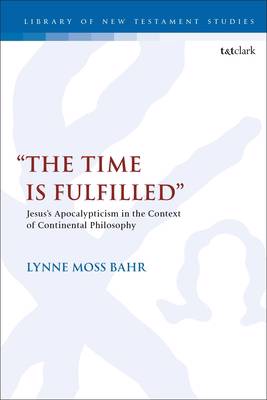
"The Time Is Fulfilled"
Jesus's Apocalypticism in the Context of Continental Philosophy
Lynne Moss Bahr
€ 79,95
+ 159 punten
Eenvoudig bestellen
Veilig betalen


Gratis thuislevering vanaf € 30 (via bpost)
Gratis levering in je Standaard Boekhandel
Omschrijving
In this study, Lynne Moss Bahr explores the concept of temporality as central to Jesus's proclamation of the Kingdom of God. Using insights from continental philosophy on the messianic, which expose the false claim that time progresses in a linear continuum, Bahr presents these philosophical positions in critical dialogue with the sayings of Jesus regarding time and time's fulfillment. She shows how the Kingdom represents the possibilities of a disruption in time, one that reveals the intrinsic relation between God and humanity.
In illustrating how Jesus's sayings regarding time are thus expressions of his messianic identity-as of the world and not of the world--Bahr argues that the meaning of Jesus's identity as Messiah is embedded in the disjuncture of time, in the impossibility of "now," from which the Kingdom comes . Bahr's use of critical theory in this study expands the concept of God's Kingdom beyond the traditional confines of the discipline.Specificaties
Betrokkenen
- Auteur(s):
- Uitgeverij:
Inhoud
- Aantal bladzijden:
- 160
- Taal:
- Engels
- Reeks:
Eigenschappen
- Productcode (EAN):
- 9780567695222
- Verschijningsdatum:
- 25/06/2020
- Uitvoering:
- Paperback
- Formaat:
- Trade paperback (VS)
- Afmetingen:
- 156 mm x 234 mm
- Gewicht:
- 231 g


Alleen bij Standaard Boekhandel
+ 159 punten op je klantenkaart van Standaard Boekhandel
CADEAU

AANGERADEN


Beoordelingen
We publiceren alleen reviews die voldoen aan de voorwaarden voor reviews. Bekijk onze voorwaarden voor reviews.