


- Afhalen na 1 uur in een winkel met voorraad
- Gratis thuislevering in België vanaf € 30
- Ruim aanbod met 7 miljoen producten
- Afhalen na 1 uur in een winkel met voorraad
- Gratis thuislevering in België vanaf € 30
- Ruim aanbod met 7 miljoen producten





€ 44,45
+ 88 punten
Omschrijving
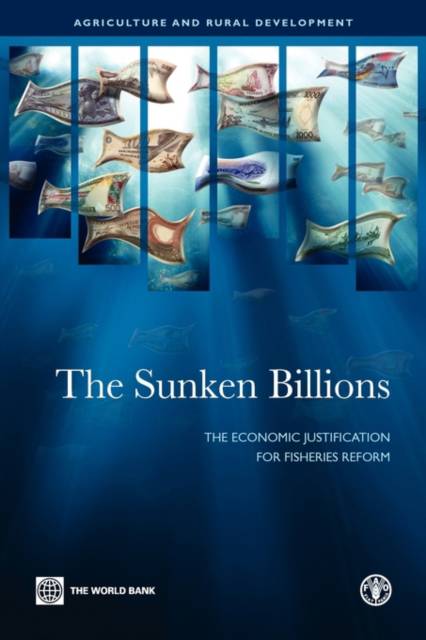
Economic losses in marine fisheries resulting from poor management, inefficiencies, and overfishing add up to US$50 billion per year. Taken over the last three decades, these losses total over US$2 trillion, a figure roughly equivalent to the GDP of Italy. The Sunken Billions: The Economic Justification for Fisheries Reform argues that well-managed marine fisheries could turn most of these losses into sustainable economic benefits for millions of fishers and coastal communities. According to this book, the bulk of losses occur in two main ways. First, depleted fish stocks mean that there are fewer fish to catch, and therefore the cost of finding and catching them is greater than it might be. Second, fleet overcapacity means that the economic benefits of fishing are dissipated due to redundant investment and operating costs. The book stresses that the figure of US$50 billion represents a conservative estimate, as it excludes losses to recreational fisheries and marine tourism as well as losses due to illegal fishing.. The Sunken Billions argues that strengthened fishing rights can provide fishers and fishing communities with incentives to operate in an economically efficient and socially responsible manner. Phasing out subsidies that enhance redundant fishing capacity and harvesting effort will improve efficiency. Greater transparency in allocation of fish resources and greater public accountability for fisheries management and health of fish stocks will help eco-labeling initiatives to certify sustainable fisheries.
Specificaties
Betrokkenen
- Auteur(s):
- Uitgeverij:
Inhoud
- Aantal bladzijden:
- 128
- Taal:
- Engels
- Reeks:
Eigenschappen
- Productcode (EAN):
- 9780821377901
- Verschijningsdatum:
- 24/02/2009
- Uitvoering:
- Paperback
- Formaat:
- Trade paperback (VS)
- Afmetingen:
- 152 mm x 221 mm
- Gewicht:
- 226 g


Alleen bij Standaard Boekhandel
+ 88 punten op je klantenkaart van Standaard Boekhandel
Cadeau

AANGERADEN


Beoordelingen
We publiceren alleen reviews die voldoen aan de voorwaarden voor reviews. Bekijk onze voorwaarden voor reviews.