


- Afhalen na 1 uur in een winkel met voorraad
- Gratis thuislevering in België vanaf € 30
- Ruim aanbod met 7 miljoen producten
- Afhalen na 1 uur in een winkel met voorraad
- Gratis thuislevering in België vanaf € 30
- Ruim aanbod met 7 miljoen producten





€ 124,45
+ 248 punten
Uitvoering
Omschrijving
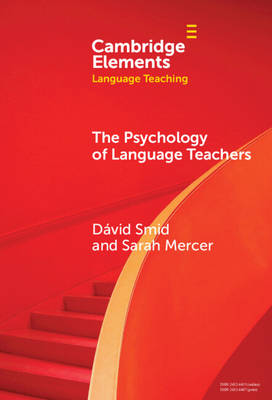
This Element has three main aims. First, the authors wish to synthesize research on language teacher psychology to provide state-of-the-art insights into the topic and identify possible avenues of scholarship. They do so by adopting a trilogy of mind perspective, which helps organize aspects of teacher psychology into three domains: cognition, affect, and motivation. Second, the overview of the literature outlines key issues, identifies gaps in current understandings and scholarship, and it also introduces less common constructs (e.g., flow, collective efficacy beliefs, and attributions) to inspire future research in this area. Third, the authors intend to reflect on practical implications for practitioners, language teacher educators, preservice teachers, and policymakers of the research to date. Rather than offering a definitive account, the authors seek to open dialogue and encourage further research and practice to ensure language teachers in all contexts receive the recognition and thus support they deserve.
Specificaties
Betrokkenen
- Auteur(s):
- Uitgeverij:
Inhoud
- Aantal bladzijden:
- 90
- Taal:
- Engels
- Reeks:
Eigenschappen
- Productcode (EAN):
- 9781009513869
- Verschijningsdatum:
- 14/05/2026
- Uitvoering:
- Hardcover
- Formaat:
- Genaaid
- Afmetingen:
- 152 mm x 229 mm
- Gewicht:
- 290 g


Alleen bij Standaard Boekhandel
+ 248 punten op je klantenkaart van Standaard Boekhandel
Cadeau

AANGERADEN


Beoordelingen
We publiceren alleen reviews die voldoen aan de voorwaarden voor reviews. Bekijk onze voorwaarden voor reviews.