


- Afhalen na 1 uur in een winkel met voorraad
- Gratis thuislevering in België vanaf € 30
- Ruim aanbod met 7 miljoen producten
- Afhalen na 1 uur in een winkel met voorraad
- Gratis thuislevering in België vanaf € 30
- Ruim aanbod met 7 miljoen producten





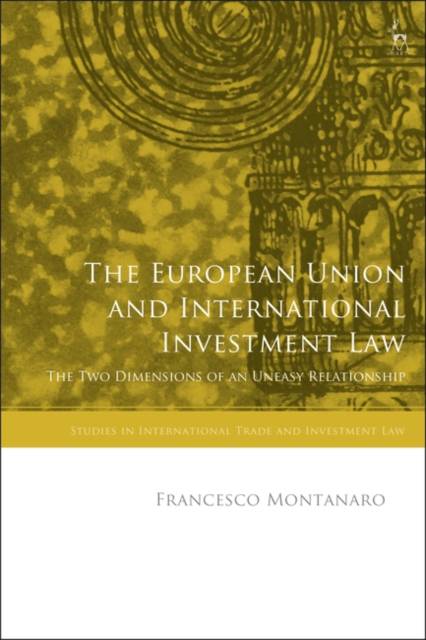
The European Union and International Investment Law
The Two Dimensions of an Uneasy Relationship
Francesco Montanaro
€ 203,95
+ 407 punten
Omschrijving
This book explores the interaction between the EU and international investment law, both at the internal level, namely within the EU internal market, and at the external level, i.e. in the context of its relations with third States.
The joint treatment of these dimensions reveals that the EU has assumed an ostensibly ambivalent attitude towards international investment law. At the internal level, it has consistently asserted that intra-EU international investment agreements (IIAs) are not compatible with EU law and advocated their termination. At the external level, by contrast, it has eagerly deployed IIAs to develop its post-Lisbon international investment policy.
The book finds that beneath this apparent ambivalence towards international investment law ultimately lies the EU's attempt to impose, both internally and externally, its own original model of regulation of cross-border investment. It then argues that the EU adopted this approach with a view to supporting its internal market, enhancing its external influence, and, ultimately, pursuing long-term 'federal aspirations'. Finally, the book identifies the legal and political obstacles that have curtailed the EU's efforts at both the internal and the external level.
The joint treatment of these dimensions reveals that the EU has assumed an ostensibly ambivalent attitude towards international investment law. At the internal level, it has consistently asserted that intra-EU international investment agreements (IIAs) are not compatible with EU law and advocated their termination. At the external level, by contrast, it has eagerly deployed IIAs to develop its post-Lisbon international investment policy.
The book finds that beneath this apparent ambivalence towards international investment law ultimately lies the EU's attempt to impose, both internally and externally, its own original model of regulation of cross-border investment. It then argues that the EU adopted this approach with a view to supporting its internal market, enhancing its external influence, and, ultimately, pursuing long-term 'federal aspirations'. Finally, the book identifies the legal and political obstacles that have curtailed the EU's efforts at both the internal and the external level.
Specificaties
Betrokkenen
- Auteur(s):
- Uitgeverij:
Inhoud
- Aantal bladzijden:
- 216
- Taal:
- Engels
- Reeks:
Eigenschappen
- Productcode (EAN):
- 9781509963805
- Verschijningsdatum:
- 23/03/2023
- Uitvoering:
- Hardcover
- Formaat:
- Genaaid
- Afmetingen:
- 156 mm x 234 mm
- Gewicht:
- 476 g



Alleen bij Standaard Boekhandel
+ 407 punten op je klantenkaart van Standaard Boekhandel

Beoordelingen
We publiceren alleen reviews die voldoen aan de voorwaarden voor reviews. Bekijk onze voorwaarden voor reviews.