


- Afhalen na 1 uur in een winkel met voorraad
- Gratis thuislevering in België vanaf € 30
- Ruim aanbod met 7 miljoen producten
- Afhalen na 1 uur in een winkel met voorraad
- Gratis thuislevering in België vanaf € 30
- Ruim aanbod met 7 miljoen producten





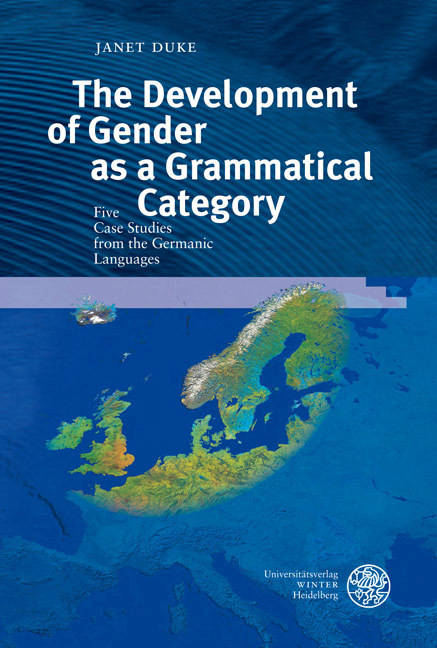
The Development of Gender as a Grammatical Category
Five Case Studies from the Germanic Languages. Dissertationsschrift
Janet Duke
€ 55,45
+ 110 punten
Omschrijving
This volume looks at the diachronic development of gender as a grammatical category both from a universal and from a Germanic perspective. The study begins with a discussion of the unclear role of gender in the communicative process, including its status in relation to other grammatical categories, its emergence and development through grammaticalization, its relationship to derivational morphology, and the reasons for gender reduction and loss. The development of gender as a grammatical category is then traced in five case studies: German, Mainland Scandinavian, English, Dutch, and Afrikaans. All of these languages have witnessed a reduction in the number of so-called targets which take gender inflection and - with the notable exception of the German - all have reduced the number of genders or have lost the category entirely. It is shown that in most cases gender remains an important factor in the distribution of inflection classes. The potential reasons for gender reduction and loss are also compared, especially with respect to language or dialect contact as a decisive or contributing factor.
Specificaties
Betrokkenen
- Auteur(s):
- Uitgeverij:
Inhoud
- Taal:
- Engels
- Reeks:
- Reeksnummer:
- nr. 33
Eigenschappen
- Productcode (EAN):
- 9783825355425
- Uitvoering:
- Hardcover
- Afmetingen:
- 165 mm x 245 mm
- Gewicht:
- 644 g


Alleen bij Standaard Boekhandel
+ 110 punten op je klantenkaart van Standaard Boekhandel
Cadeau

AANGERADEN


Beoordelingen
We publiceren alleen reviews die voldoen aan de voorwaarden voor reviews. Bekijk onze voorwaarden voor reviews.