



Je cadeautjes zeker op tijd in huis hebben voor de feestdagen? Kom langs in onze winkels en vind het perfecte geschenk!
- Afhalen na 1 uur in een winkel met voorraad
- Gratis thuislevering in België vanaf € 30
- Ruim aanbod met 7 miljoen producten
Je cadeautjes zeker op tijd in huis hebben voor de feestdagen? Kom langs in onze winkels en vind het perfecte geschenk!
- Afhalen na 1 uur in een winkel met voorraad
- Gratis thuislevering in België vanaf € 30
- Ruim aanbod met 7 miljoen producten





€ 271,45
+ 542 punten
Uitvoering
Omschrijving
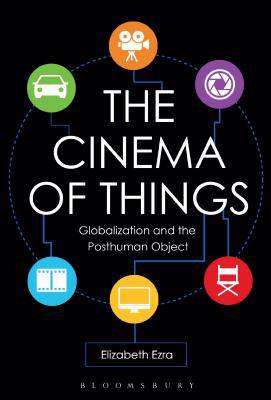
This book explores the border zones between life and non-life as represented in cinema from the end of the nineteenth century, when France led the global film industry, to the first decades of the twenty-first century, when world film markets are dominated by Hollywood. Informed by both the Internet of Things and the Parliament of Things, The Cinema of Things examines cinematic depictions of the ways in which human beings are prosthetically engaged with life beyond the self in the global age: by hyperconsumption; by structures of racial and sexual objectification that reduce people designated as "others+? to objects of fascination, sexual gratification, warfare, or labor; and by information technology that replaces human agency with encoding.
Consumer culture, a key feature of globalization, posits that we must supplement ourselves with commodities without which we would otherwise be incomplete: but these prostheses, rather than enhancing us, end up creating the insufficiencies they were meant to overcome. We are engulfed by objects, to the extent that we ourselves are becoming objectified. At the same time, objects, especially technological objects, are becoming increasingly autonomous, assuming roles that were once the preserve of human agency. We are becoming the objects of globalization, and cinema imaginatively represents this transformation, but it also offers us the possibility of retaining our humanity in the process.
Consumer culture, a key feature of globalization, posits that we must supplement ourselves with commodities without which we would otherwise be incomplete: but these prostheses, rather than enhancing us, end up creating the insufficiencies they were meant to overcome. We are engulfed by objects, to the extent that we ourselves are becoming objectified. At the same time, objects, especially technological objects, are becoming increasingly autonomous, assuming roles that were once the preserve of human agency. We are becoming the objects of globalization, and cinema imaginatively represents this transformation, but it also offers us the possibility of retaining our humanity in the process.
Specificaties
Betrokkenen
- Auteur(s):
- Uitgeverij:
Inhoud
- Aantal bladzijden:
- 216
- Taal:
- Engels
Eigenschappen
- Productcode (EAN):
- 9781501328855
- Verschijningsdatum:
- 2/11/2017
- Uitvoering:
- Hardcover
- Formaat:
- Genaaid
- Afmetingen:
- 152 mm x 234 mm
- Gewicht:
- 498 g


Alleen bij Standaard Boekhandel
+ 542 punten op je klantenkaart van Standaard Boekhandel
CADEAU


Beoordelingen
We publiceren alleen reviews die voldoen aan de voorwaarden voor reviews. Bekijk onze voorwaarden voor reviews.