


- Afhalen na 1 uur in een winkel met voorraad
- Gratis thuislevering in België vanaf € 30
- Ruim aanbod met 7 miljoen producten
- Afhalen na 1 uur in een winkel met voorraad
- Gratis thuislevering in België vanaf € 30
- Ruim aanbod met 7 miljoen producten





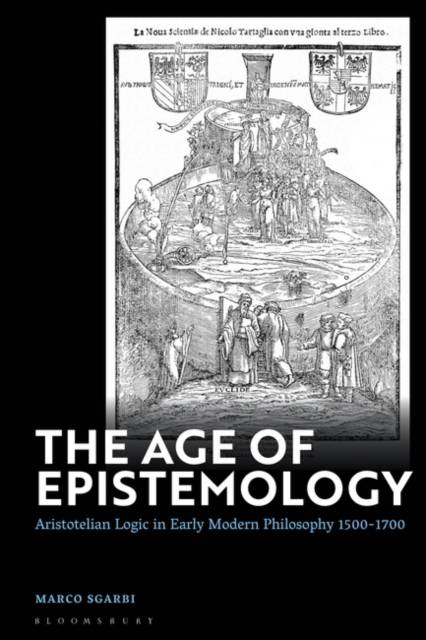
The Age of Epistemology
Aristotelian Logic in Early Modern Philosophy 1500-1700
Marco Sgarbi
Hardcover | Engels
€ 220,45
+ 440 punten
Omschrijving
Marco Sgarbi tells a new history of epistemology from the Renaissance to Newton through the impact of Aristotelian scientific doctrines on key figures including Galileo Galilei, Thomas Hobbes, René Descartes, John Locke, Gottfried Wilhelm Leibniz and Isaac Newton.
This history illuminates the debates philosophers had on deduction, meditation, regressus, syllogism, experiment and observation, the certainty of mathematics and the foundations of scientific knowledge. Sgarbi focuses on the Aristotelian education key philosophers received, providing a concrete historical framework through which to read epistemological re-definitions, developments and transformations over three centuries. The Age of Epistemology further highlights how Aristotelianism itself changed over time by absorbing doctrines from other philosophical traditions and generating a variety of interpretations in the process.Specificaties
Betrokkenen
- Auteur(s):
- Uitgeverij:
Inhoud
- Aantal bladzijden:
- 312
- Taal:
- Engels
Eigenschappen
- Productcode (EAN):
- 9781350326545
- Verschijningsdatum:
- 23/02/2023
- Uitvoering:
- Hardcover
- Formaat:
- Genaaid
- Afmetingen:
- 156 mm x 234 mm
- Gewicht:
- 612 g


Alleen bij Standaard Boekhandel
+ 440 punten op je klantenkaart van Standaard Boekhandel
Cadeau

AANGERADEN


Beoordelingen
We publiceren alleen reviews die voldoen aan de voorwaarden voor reviews. Bekijk onze voorwaarden voor reviews.