


- Afhalen na 1 uur in een winkel met voorraad
- Gratis thuislevering in België vanaf € 30
- Ruim aanbod met 7 miljoen producten
- Afhalen na 1 uur in een winkel met voorraad
- Gratis thuislevering in België vanaf € 30
- Ruim aanbod met 7 miljoen producten





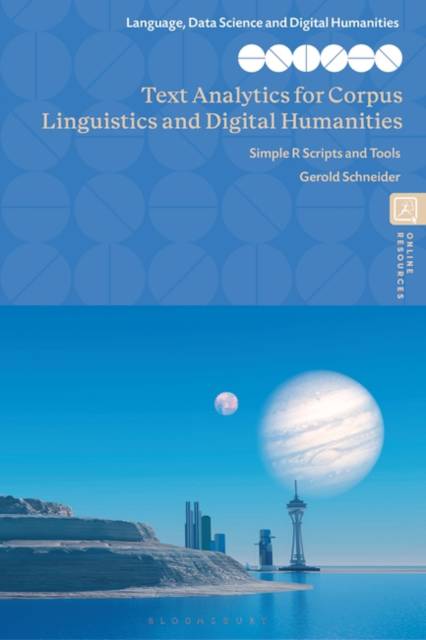
Text Analytics for Corpus Linguistics and Digital Humanities
Simple R Scripts and Tools
Gerold Schneider
€ 228,95
+ 457 punten
Uitvoering
Omschrijving
Do you want to gain a deeper understanding of how big tech analyzes and exploits our text data, or investigate how political parties differ by analyzing textual styles, associations and trends in documents? Or create a map of a text collection andwrite a simple QA system yourself?
This book explores how to apply state-of-the-art text analytics methods to detect and visualize phenomena in text data. Solidly based on methods from corpus linguistics, natural language processing, text analytics and digital humanities, this book shows readers how to conduct experiments with their own corpora and research questions, underpin their theories, quantify the differences and pinpoint characteristics. Case studies and experiments are detailed in every chapter using real-world and open access corpora from politics, World English, history, and literature. The results are interpreted and put into perspective, pitfalls are pointed out, and necessary pre-processing steps are demonstrated. This book also demonstrates how to use the programming language R, as well as simple alternatives and additions to R, to conduct experiments and employ visualisations by example, with extensible R-code, recipes, links to corpora, and a wide range of methods. The methods introduced can be used across texts of all disciplines, from history or literature to party manifestos and patient reports.
This book explores how to apply state-of-the-art text analytics methods to detect and visualize phenomena in text data. Solidly based on methods from corpus linguistics, natural language processing, text analytics and digital humanities, this book shows readers how to conduct experiments with their own corpora and research questions, underpin their theories, quantify the differences and pinpoint characteristics. Case studies and experiments are detailed in every chapter using real-world and open access corpora from politics, World English, history, and literature. The results are interpreted and put into perspective, pitfalls are pointed out, and necessary pre-processing steps are demonstrated. This book also demonstrates how to use the programming language R, as well as simple alternatives and additions to R, to conduct experiments and employ visualisations by example, with extensible R-code, recipes, links to corpora, and a wide range of methods. The methods introduced can be used across texts of all disciplines, from history or literature to party manifestos and patient reports.
Specificaties
Betrokkenen
- Auteur(s):
- Uitgeverij:
Inhoud
- Aantal bladzijden:
- 236
- Taal:
- Engels
- Reeks:
Eigenschappen
- Productcode (EAN):
- 9781350370821
- Verschijningsdatum:
- 2/05/2024
- Uitvoering:
- Hardcover
- Formaat:
- Genaaid
- Afmetingen:
- 156 mm x 234 mm
- Gewicht:
- 512 g


Alleen bij Standaard Boekhandel
+ 457 punten op je klantenkaart van Standaard Boekhandel
AANGERADEN


Beoordelingen
We publiceren alleen reviews die voldoen aan de voorwaarden voor reviews. Bekijk onze voorwaarden voor reviews.