


- Afhalen na 1 uur in een winkel met voorraad
- Gratis thuislevering in België vanaf € 30
- Ruim aanbod met 7 miljoen producten
- Afhalen na 1 uur in een winkel met voorraad
- Gratis thuislevering in België vanaf € 30
- Ruim aanbod met 7 miljoen producten





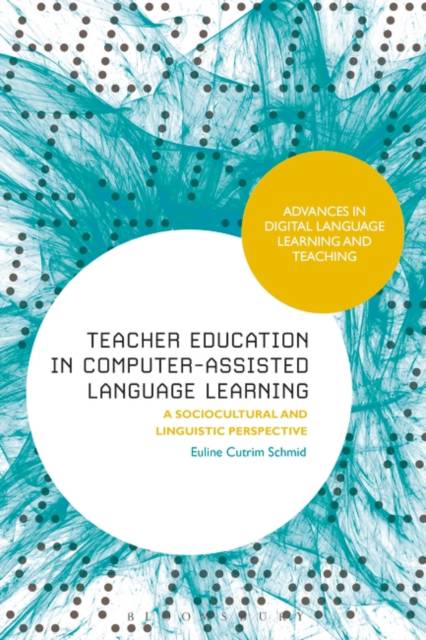
Teacher Education in Computer-Assisted Language Learning
A Sociocultural and Linguistic Perspective
Euline Cutrim Schmid
€ 322,45
+ 644 punten
Uitvoering
Omschrijving
Even though many pre-service and in-service teacher programs now address information and computer technology, computer- assisted language learning (CALL) teacher education is still reported as inadequate. Why is this? This book elaborates on some of the existing concerns and through deft analysis of longitudinal data begins to piece together a future road map for CALL teacher education.
The book adopts a sociocultural approach, based on the principle that teaching (and learning how to teach) is a long term, complex developmental process that operates through participation in social practices that come with the territory. Euline Cutrim Schmid highlights the need for situated and localized learning, pre-service and in-service collaboration and collaborative peer-assisted learning. Above all of this, the book recommends and proves the efficacy of socially aware and professional reflective practice. This is an essential sociolinguistic take on the computer learning revolution.
The book adopts a sociocultural approach, based on the principle that teaching (and learning how to teach) is a long term, complex developmental process that operates through participation in social practices that come with the territory. Euline Cutrim Schmid highlights the need for situated and localized learning, pre-service and in-service collaboration and collaborative peer-assisted learning. Above all of this, the book recommends and proves the efficacy of socially aware and professional reflective practice. This is an essential sociolinguistic take on the computer learning revolution.
Specificaties
Betrokkenen
- Auteur(s):
- Uitgeverij:
Inhoud
- Aantal bladzijden:
- 224
- Taal:
- Engels
- Reeks:
Eigenschappen
- Productcode (EAN):
- 9781474292757
- Verschijningsdatum:
- 24/08/2017
- Uitvoering:
- Hardcover
- Formaat:
- Genaaid
- Afmetingen:
- 156 mm x 234 mm
- Gewicht:
- 485 g


Alleen bij Standaard Boekhandel
+ 644 punten op je klantenkaart van Standaard Boekhandel
Cadeau

AANGERADEN


Beoordelingen
We publiceren alleen reviews die voldoen aan de voorwaarden voor reviews. Bekijk onze voorwaarden voor reviews.