



Bedankt voor het vertrouwen het afgelopen jaar! Om jou te bedanken bieden we GRATIS verzending (in België) aan op alles gedurende de hele maand januari.
- Afhalen na 1 uur in een winkel met voorraad
- In januari gratis thuislevering in België
- Ruim aanbod met 7 miljoen producten
Bedankt voor het vertrouwen het afgelopen jaar! Om jou te bedanken bieden we GRATIS verzending (in België) aan op alles gedurende de hele maand januari.
- Afhalen na 1 uur in een winkel met voorraad
- In januari gratis thuislevering in België
- Ruim aanbod met 7 miljoen producten





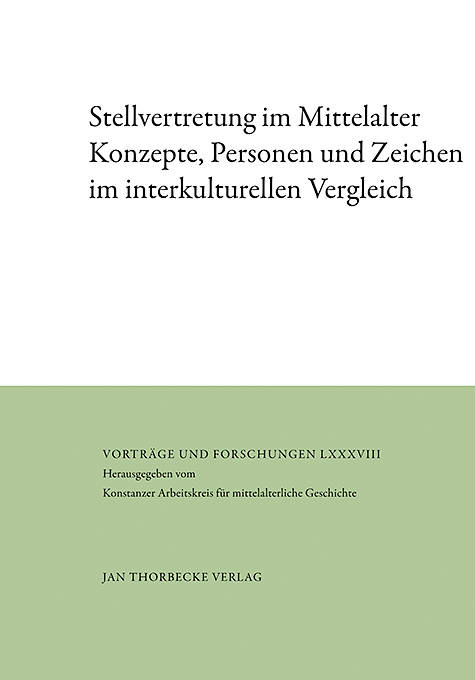
Stellvertretung Im Mittelalter
€ 128,95
+ 257 punten
Omschrijving
In the Middle Ages, representation was important as a legitimizing principle of sacralized rule (representation of God/Christ on earth); but it was also omnipresent as a necessary instrument of lordship in political and ecclesiastical, but also economic, legal, and social life. Nevertheless, in historical research - in contrast to theology and legal history - this phenomenon is examined rarely. Above all, there is little in-depth research on the concepts as well as on the forms of representation, including their differences in terminology and contents. The aim of this volume is to examine and compare concepts, agents and signs of primarily religiously connotated or clerically based representation in the Christian Western and Eastern Churches, Islam, the Mongol Empire and Japan.
Specificaties
Betrokkenen
- Uitgeverij:
Inhoud
- Aantal bladzijden:
- 484
- Taal:
- Engels, Duits
- Reeks:
- Reeksnummer:
- nr. 88
Eigenschappen
- Productcode (EAN):
- 9783799568883
- Verschijningsdatum:
- 8/01/2024
- Uitvoering:
- Hardcover
- Formaat:
- Genaaid
- Afmetingen:
- 170 mm x 239 mm
- Gewicht:
- 1524 g


Alleen bij Standaard Boekhandel
+ 257 punten op je klantenkaart van Standaard Boekhandel
SOLDEN


Beoordelingen
We publiceren alleen reviews die voldoen aan de voorwaarden voor reviews. Bekijk onze voorwaarden voor reviews.