


- Afhalen na 1 uur in een winkel met voorraad
- Gratis thuislevering in België vanaf € 30
- Ruim aanbod met 7 miljoen producten
- Afhalen na 1 uur in een winkel met voorraad
- Gratis thuislevering in België vanaf € 30
- Ruim aanbod met 7 miljoen producten




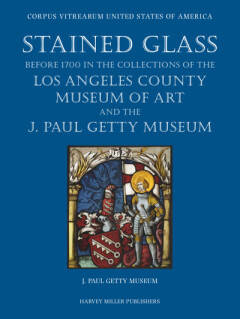
Stained Glass Before 1700 in the Collections of the Los Angeles County Museum of Art and the J. Paul Getty Museum
Marjolaine Raguin
€ 265,00
+ 530 punten
Omschrijving
This volume in the international Corpus Vitrearum series profiles two prestigious institutions. The works date from roughly 1210 through 1667 and represent art of Austria, England, France, the Netherlands, Belgium, Germany, and Switzerland. Demonstrating techniques found in thirteenth-century large-scale windows of deeply saturated color to the small-scale panels of uncolored glass whose designs are linked to the great printmakers of the sixteenth century, the collections are remarkably diverse and comprehensive. A rare fragment of one of the most prestigious installations in Europe, that of Klosterneuburg, Austria, dates from 1335.A brilliantly executed heraldic panel from Nuremberg dates to the era of Albrecht Durer, and shows the sorting marks used to identify and assemble panels after a firing of multiple windows in the kiln. Large cloister windows of the later Middle Ages are represented by four panels from the Swiss convent of Rathausen, suppressed during the Reformation. The Los Angeles County Museum is particularly rich in small panels of the average citizen, farmers and cattle dealers from Switzerland and Germany, meant for insertion into the lattice windows of an inn, town hall, parlor, or church.With great good humor, one panel shows a goldsmith and his wife standing proudly while above them monkeys are busy in the workshop. These works speak to us over time, revealing as well, the attraction of these translucent images for collectors, including William Randolph Hearst.
Specificaties
Betrokkenen
- Auteur(s):
- Uitgeverij:
Inhoud
- Aantal bladzijden:
- 2024
- Taal:
- Engels
- Reeks:
- Reeksnummer:
- nr. 10
Eigenschappen
- Productcode (EAN):
- 9781912554713
- Verschijningsdatum:
- 25/07/2024
- Uitvoering:
- Hardcover
- Formaat:
- Genaaid
- Afmetingen:
- 241 mm x 320 mm
- Gewicht:
- 3401 g


Alleen bij Standaard Boekhandel
+ 530 punten op je klantenkaart van Standaard Boekhandel
Cadeau

AANGERADEN


Beoordelingen
We publiceren alleen reviews die voldoen aan de voorwaarden voor reviews. Bekijk onze voorwaarden voor reviews.