


- Afhalen na 1 uur in een winkel met voorraad
- Gratis thuislevering in België vanaf € 30
- Ruim aanbod met 7 miljoen producten
- Afhalen na 1 uur in een winkel met voorraad
- Gratis thuislevering in België vanaf € 30
- Ruim aanbod met 7 miljoen producten




Omschrijving
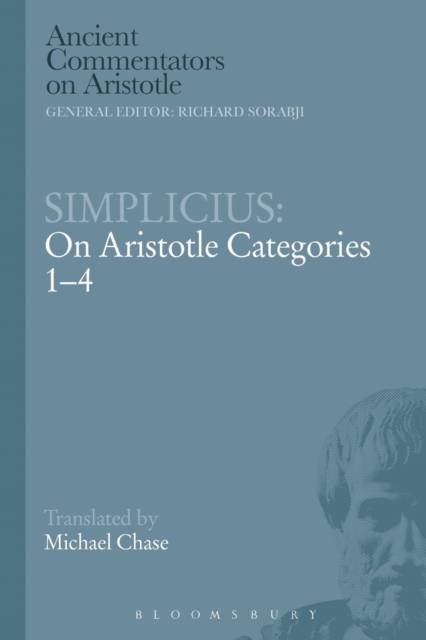
Simplicius' commentary on Aristotle's Categories is the most comprehensive philosophical critique of the work ever written, representing 600 years of criticism. In his Categories, Aristotle divides what exists in the sensible world into ten categories of Substance, Quantity, Relative, Quality and so on. Simplicius starts with a survey of previous commentators, and an introductory set of questions about Aristotle's philosophy and about the Categories in particular. The commentator, he says, needs to present Plato and Aristotle as in harmony on most things. Why are precisely ten categories named, given that Plato did with fewer distinctions? We have a survey of views on this. And where in the scheme of categories would one fit a quality that defines a substance - under substance or under quality? In his own commentary, Porphyry suggested classifying a defining quality as something distinct, a substantial quality, but others objected that this would constitute an eleventh. The most persistent question dealt with here is whether the categories classify words, concepts, or things.
Specificaties
Betrokkenen
- Auteur(s):
- Vertaler(s):
- Uitgeverij:
Inhoud
- Aantal bladzijden:
- 256
- Taal:
- Engels
- Reeks:
Eigenschappen
- Productcode (EAN):
- 9781472557384
- Verschijningsdatum:
- 10/04/2014
- Uitvoering:
- Paperback
- Formaat:
- Trade paperback (VS)
- Afmetingen:
- 156 mm x 234 mm
- Gewicht:
- 290 g


Alleen bij Standaard Boekhandel
+ 179 punten op je klantenkaart van Standaard Boekhandel
AANGERADEN


Beoordelingen
We publiceren alleen reviews die voldoen aan de voorwaarden voor reviews. Bekijk onze voorwaarden voor reviews.