



Bedankt voor het vertrouwen het afgelopen jaar! Om jou te bedanken bieden we GRATIS verzending (in België) aan op alles gedurende de hele maand januari.
- Afhalen na 1 uur in een winkel met voorraad
- Gratis thuislevering in België vanaf € 30
- Ruim aanbod met 7 miljoen producten
Bedankt voor het vertrouwen het afgelopen jaar! Om jou te bedanken bieden we GRATIS verzending (in België) aan op alles gedurende de hele maand januari.
- Afhalen na 1 uur in een winkel met voorraad
- Gratis thuislevering in België vanaf € 30
- Ruim aanbod met 7 miljoen producten





Omschrijving
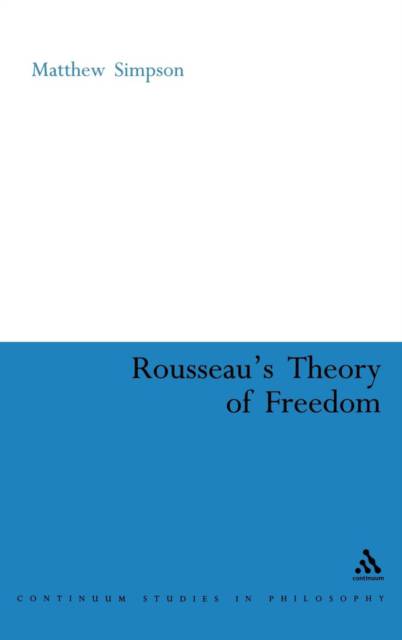
Jean-Jacques Rousseau has a claim to be ranked above even Karl Marx as the political philosopher who has most influenced everyday life. His much-read philosophy of education alone would qualify him for a high place, but his political theory is even more important: decisions affecting millions of people were made based on the reading of certain lines of the Social Contract. Yet while politicians and scholars have studied this book for 250 years, almost no agreement exists on how to interpret its central concept: freedom. Rousseau's theory of freedom has led him to be called everything from the greatest prophet of individual liberty to the designer of the first totalitarian state.
This book offers a new, unifying interpretation of the theory of freedom in the Social Contract. Simpson gives a careful analysis of Rousseau's theory of the social pact, and then examines the kinds of freedom that it brings about, showing how Rousseau's individualist and collectivist aspects fit into a larger and logically coherent theory of human liberty. Simpson's book not only helps us to understand one of the pre-eminent political minds of the 18th century, but also brings us into closer conversation with those he influenced, who have done so much to shape our world. And in light of the interest in contemporary contractualist philosophers like Rawls, Scanlon, and Gauthier, readers will find it worthwhile to return to the thinker who offers one of the most radical, profound, and insightful theories of the social contract ever devised.
This book offers a new, unifying interpretation of the theory of freedom in the Social Contract. Simpson gives a careful analysis of Rousseau's theory of the social pact, and then examines the kinds of freedom that it brings about, showing how Rousseau's individualist and collectivist aspects fit into a larger and logically coherent theory of human liberty. Simpson's book not only helps us to understand one of the pre-eminent political minds of the 18th century, but also brings us into closer conversation with those he influenced, who have done so much to shape our world. And in light of the interest in contemporary contractualist philosophers like Rawls, Scanlon, and Gauthier, readers will find it worthwhile to return to the thinker who offers one of the most radical, profound, and insightful theories of the social contract ever devised.
Specificaties
Betrokkenen
- Auteur(s):
- Uitgeverij:
Inhoud
- Aantal bladzijden:
- 144
- Taal:
- Engels
- Reeks:
- Reeksnummer:
- nr. 21
Eigenschappen
- Productcode (EAN):
- 9780826486400
- Verschijningsdatum:
- 10/04/2006
- Uitvoering:
- Hardcover
- Formaat:
- Genaaid
- Afmetingen:
- 157 mm x 234 mm
- Gewicht:
- 294 g


Alleen bij Standaard Boekhandel
+ 780 punten op je klantenkaart van Standaard Boekhandel
CADEAU


Beoordelingen
We publiceren alleen reviews die voldoen aan de voorwaarden voor reviews. Bekijk onze voorwaarden voor reviews.