


- Afhalen na 1 uur in een winkel met voorraad
- Gratis thuislevering in België vanaf € 30
- Ruim aanbod met 7 miljoen producten
- Afhalen na 1 uur in een winkel met voorraad
- Gratis thuislevering in België vanaf € 30
- Ruim aanbod met 7 miljoen producten





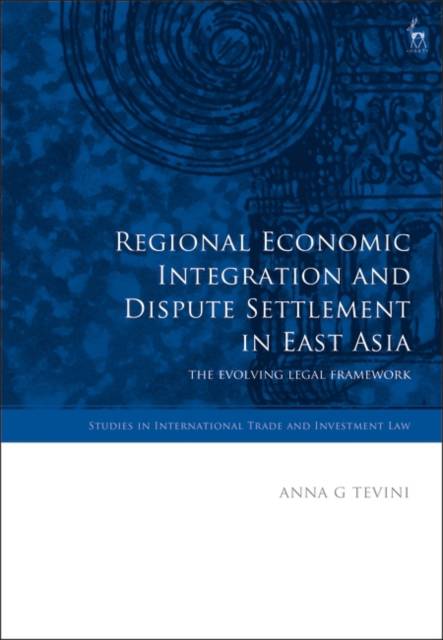
Regional Economic Integration and Dispute Settlement in East Asia
The Evolving Legal Framework
Anna G Tevini
€ 373,45
+ 746 punten
Omschrijving
The accession of the People's Republic of China to the World Trade Organization (WTO) in 2001 significantly transformed the global economy both de facto and de jure. At the regional level, China's WTO accession served as an important catalyst for the establishment of Regional Trade Agreements (RTAs) in East Asia. This was a novel development for the region, since East Asian States had previously followed a largely informal, market-driven approach to regional economic integration. By contrast, rules-based economic integration involving East Asian States was traditionally limited to multilateral integration under the GATT/WTO framework.
This book systematically analyses and explains the development, nature and challenges of rules-based regional economic integration in East Asia with particular attention to the region's first four RTAs. While also addressing the socio-economic, historical and political factors influencing the development of RTAs in East Asia, the book focuses on the legal institutions governing economic integration in the Association of Southeast Asian Nations (ASEAN), as well as under the ASEAN-China Comprehensive Economic Co-Operation Agreement (ACFTA), the Japan-Singapore New Age Economic Partnership Agreement (JSEPA), and the Mainland China-Hong Kong Closer Economic Partnership Arrangement (CEPA). The book provides a systematic, comparative account of the scope, depth and (hard law versus soft law) quality of rules-based economic integration achieved under these four RTAs in the areas of trade in goods and services, investment liberalisation and protection, labour mobility, and dispute settlement.
This book systematically analyses and explains the development, nature and challenges of rules-based regional economic integration in East Asia with particular attention to the region's first four RTAs. While also addressing the socio-economic, historical and political factors influencing the development of RTAs in East Asia, the book focuses on the legal institutions governing economic integration in the Association of Southeast Asian Nations (ASEAN), as well as under the ASEAN-China Comprehensive Economic Co-Operation Agreement (ACFTA), the Japan-Singapore New Age Economic Partnership Agreement (JSEPA), and the Mainland China-Hong Kong Closer Economic Partnership Arrangement (CEPA). The book provides a systematic, comparative account of the scope, depth and (hard law versus soft law) quality of rules-based economic integration achieved under these four RTAs in the areas of trade in goods and services, investment liberalisation and protection, labour mobility, and dispute settlement.
Specificaties
Betrokkenen
- Auteur(s):
- Uitgeverij:
Inhoud
- Aantal bladzijden:
- 592
- Taal:
- Engels
- Reeks:
Eigenschappen
- Productcode (EAN):
- 9781849465830
- Verschijningsdatum:
- 28/06/2018
- Uitvoering:
- Hardcover
- Formaat:
- Genaaid
- Afmetingen:
- 170 mm x 244 mm
- Gewicht:
- 1124 g


Alleen bij Standaard Boekhandel
+ 746 punten op je klantenkaart van Standaard Boekhandel

Beoordelingen
We publiceren alleen reviews die voldoen aan de voorwaarden voor reviews. Bekijk onze voorwaarden voor reviews.