


- Afhalen na 1 uur in een winkel met voorraad
- Gratis thuislevering in België vanaf € 30
- Ruim aanbod met 7 miljoen producten
- Afhalen na 1 uur in een winkel met voorraad
- Gratis thuislevering in België vanaf € 30
- Ruim aanbod met 7 miljoen producten





€ 373,45
+ 746 punten
Uitvoering
Omschrijving
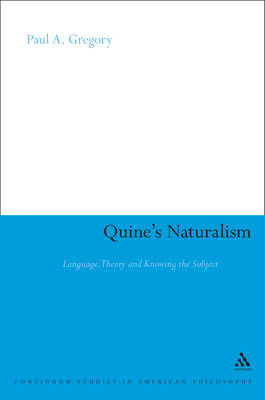
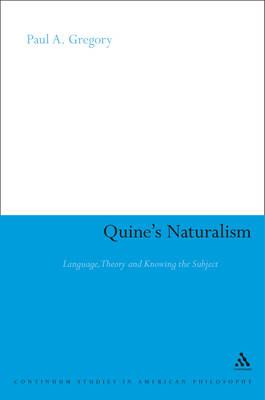
W. V. Quine was the most important naturalistic philosopher of the twentieth century and a major impetus for the recent resurgence of the view that empirical science is our best avenue to knowledge. His views, however, have not been well understood. Critics charge that Quine's naturalized epistemology is circular and that it cannot be normative. Yet, such criticisms stem from a cluster of fundamental traditional assumptions regarding language, theory, and the knowing subject - the very presuppositions that Quine is at pains to reject. Through investigation of Quine's views regarding language, knowledge, and reality, the author offers a new interpretation of Quine's naturalism. The naturalism/anti-naturalism debate can be advanced only by acknowledging and critiquing the substantial theoretical commitments implicit in the traditional view.
Gregory argues that the responses to the circularity and non-normativity objections do just that. His analysis further reveals that Quine's departure from the tradition penetrates the conception of the knowing subject, and he thus offers a new and engaging defence of Quine's naturalism.
W. V. Quine was the most important naturalistic philosopher of the twentieth century and a major impetus for the recent resurgence of the view that empirical science is our best avenue to knowledge. His views, however, have not been well understood. Critics charge that Quine's naturalized epistemology is circular and that it cannot be normative. Yet, such criticisms stem from a cluster of fundamental traditional assumptions regarding language, theory, and the knowing subject - the very presuppositions that Quine is at pains to reject. Through investigation of Quine's views regarding language, knowledge, and reality, the author offers a new interpretation of Quine's naturalism. The naturalism/anti-naturalism debate can be advanced only by acknowledging and critiquing the substantial theoretical commitments implicit in the traditional view.
Gregory argues that the responses to the circularity and non-normativity objections do just that. His analysis further reveals that Quine's departure from the tradition penetrates the conception of the knowing subject, and he thus offers a new and engaging defence of Quine's naturalism.
Specificaties
Betrokkenen
- Auteur(s):
- Uitgeverij:
Inhoud
- Aantal bladzijden:
- 156
- Taal:
- Engels
- Reeks:
- Reeksnummer:
- nr. 9
Eigenschappen
- Productcode (EAN):
- 9780826490995
- Verschijningsdatum:
- 08/10/2008
- Uitvoering:
- Hardcover
- Formaat:
- Genaaid
- Afmetingen:
- 156 mm x 234 mm
- Gewicht:
- 399 g


Alleen bij Standaard Boekhandel
+ 746 punten op je klantenkaart van Standaard Boekhandel
Cadeau

AANGERADEN


Beoordelingen
We publiceren alleen reviews die voldoen aan de voorwaarden voor reviews. Bekijk onze voorwaarden voor reviews.