


- Afhalen na 1 uur in een winkel met voorraad
- Gratis thuislevering in België vanaf € 30
- Ruim aanbod met 7 miljoen producten
- Afhalen na 1 uur in een winkel met voorraad
- Gratis thuislevering in België vanaf € 30
- Ruim aanbod met 7 miljoen producten





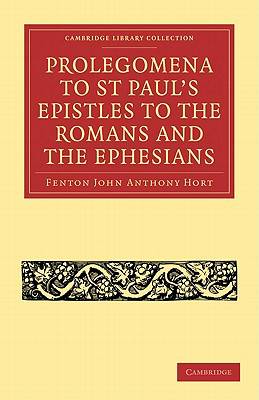
Prolegomena to St Paul's Epistles to the Romans and the Ephesians
Fenton John Anthony Hort
€ 27,95
+ 55 punten
Omschrijving
This posthumous volume, published in 1895, contains two lectures delivered in the 1880s by the biblical scholar F. J. A. Hort, Professor of Divinity at Cambridge. In these lectures, Hort addresses the question of the dating of Romans and Ephesians, their purpose, and their original readership. He examines their context in the relationship of Judaism to Christianity in the Apostolic period and the difference between Gentile, Judaistic and Roman Christianity. By treating the Epistles as historical as well as religious artefacts and analysing their language and grammar as well as content, Hort argues for the authenticity of both texts and therefore for a first-century dating. The dating of the New Testament was a central concern of Hort toward the end of his career, and he argued against F. C. Baur and the Tübingen school, who placed it in the second century. These lectures present evidence to support his argument.
Specificaties
Betrokkenen
- Auteur(s):
- Uitgeverij:
Inhoud
- Aantal bladzijden:
- 208
- Taal:
- Engels
- Reeks:
Eigenschappen
- Productcode (EAN):
- 9781108007511
- Verschijningsdatum:
- 26/11/2009
- Uitvoering:
- Paperback
- Formaat:
- Trade paperback (VS)
- Afmetingen:
- 140 mm x 216 mm
- Gewicht:
- 267 g


Alleen bij Standaard Boekhandel
+ 55 punten op je klantenkaart van Standaard Boekhandel
AANGERADEN


Beoordelingen
We publiceren alleen reviews die voldoen aan de voorwaarden voor reviews. Bekijk onze voorwaarden voor reviews.