


- Afhalen na 1 uur in een winkel met voorraad
- Gratis thuislevering in België vanaf € 30
- Ruim aanbod met 7 miljoen producten
- Afhalen na 1 uur in een winkel met voorraad
- Gratis thuislevering in België vanaf € 30
- Ruim aanbod met 7 miljoen producten





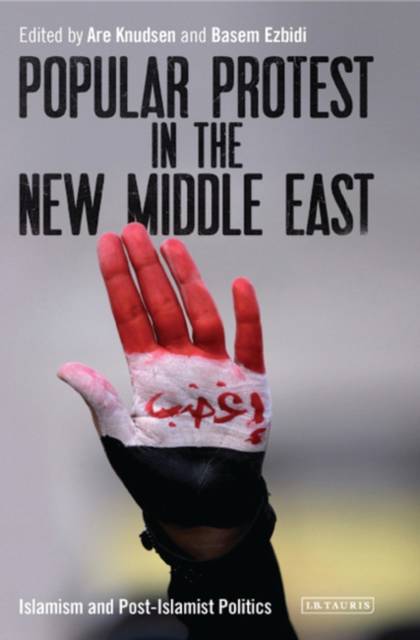
Popular Protest in the New Middle East
Islamism and Post-Islamist Politics
Are Knudsen, Basem Ezbidi
€ 195,45
+ 390 punten
Omschrijving
In the wake of the protests that spread throughout the Middle East and North Africa in late 2010 and early 2011, Islamist movements of varying political persuasions have risen to prominence. This is especially the case in post-Mubarak Egypt and post-Ben Ali Tunisia. Popular Protest in the New Middle East examines Islamist approaches to political participation and integration in the Arab world and asks whether regional trends can be discerned with respect to either the strategy of disparate movements or the challenges they confront in the various states in which they operate. It offers analysis of the ideologies and actions of these movements, ranging from countries where Islamism is in control of the state as an Islamic theocracy (Iran), the ruling party (for example, Turkey), part of the ruling coalition (Lebanon), or a parliamentary minority (such as in Jordan or Yemen). The question of political participation, and by implication integration into existing political systems, has been a significant issue for Islamist movements. Some, opting for the role of a revolutionary vanguard, have rejected the concept of participation outright.
Others, particularly those that have developed a broad popular base and operate in states where local or national elections are conducted, have invested heavily in participation, either as a method of achieving political power, or as a means of influencing public policy. This book offers a systematic examination of a variety of examples of the actions of Islamist movements, from those that employ more militant tactics to those that have a more quietist approach. Are Knudsen and Basem Ezbidi bring together an examination of the effects that various experiences of participation and integration have had on the individual movements concerned and the broader Islamist trend throughout the Middle East, making this book vital for researchers of the impact of religion on politics (and, indeed vice versa).
Others, particularly those that have developed a broad popular base and operate in states where local or national elections are conducted, have invested heavily in participation, either as a method of achieving political power, or as a means of influencing public policy. This book offers a systematic examination of a variety of examples of the actions of Islamist movements, from those that employ more militant tactics to those that have a more quietist approach. Are Knudsen and Basem Ezbidi bring together an examination of the effects that various experiences of participation and integration have had on the individual movements concerned and the broader Islamist trend throughout the Middle East, making this book vital for researchers of the impact of religion on politics (and, indeed vice versa).
Specificaties
Betrokkenen
- Auteur(s):
- Uitgeverij:
Inhoud
- Aantal bladzijden:
- 288
- Taal:
- Engels
- Reeks:
Eigenschappen
- Productcode (EAN):
- 9781780769134
- Verschijningsdatum:
- 5/09/2014
- Uitvoering:
- Hardcover
- Formaat:
- Genaaid
- Afmetingen:
- 140 mm x 218 mm
- Gewicht:
- 498 g


Alleen bij Standaard Boekhandel
+ 390 punten op je klantenkaart van Standaard Boekhandel
Cadeau

AANGERADEN


Beoordelingen
We publiceren alleen reviews die voldoen aan de voorwaarden voor reviews. Bekijk onze voorwaarden voor reviews.