


- Afhalen na 1 uur in een winkel met voorraad
- Gratis thuislevering in België vanaf € 30
- Ruim aanbod met 7 miljoen producten
- Afhalen na 1 uur in een winkel met voorraad
- Gratis thuislevering in België vanaf € 30
- Ruim aanbod met 7 miljoen producten





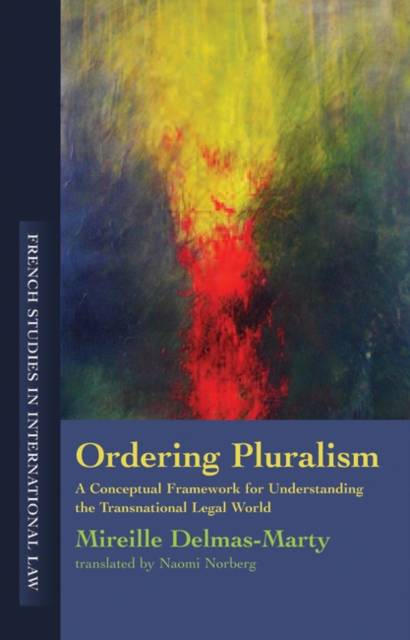
Ordering Pluralism
A Conceptual Framework for Understanding the Transnational Legal World
Mireille Delmas-Marty
€ 101,95
+ 203 punten
Omschrijving
From the viewpoint of the constitutional crisis in Europe, slow UN reforms, difficulties implementing the Kyoto Protocol and the International Criminal Court, and tensions between human rights and trade, Mireille Delmas-Marty's 'journey through the legal landscape' of the early years of the 21st century shows it to be dominated by imprecision, uncertainty and instability. The early 21st century appears to be the era of great disorder: in the silence of the market and the fracas of arms, a world overly fragmented by anarchical globalisation is being unified too quickly through hegemonic integration. How, she asks, can we move beyond the relative and the universal to build order without imposing it, to accept pluralism without giving up on a common law?
Neither utopian fusion nor illusory autonomy, Ordering Pluralism is her answer: both an epistemological revolution and an art, it means creating a common legal area by progressive adjustments that preserve diversity. Since an immutable world order is impossible, the imaginative forces of law must be called upon to invent a flexible process of harmonisation that leaves room for believing we can agree on - and protect - common values. 'The book is timely and relevant to the practical concerns of those who work with, and within, the legal system. We must thank Professor Delmas-Marty for her fine work.'From the foreword, Stephen Breyer, Washington, DC
Specificaties
Betrokkenen
- Auteur(s):
- Vertaler(s):
- Uitgeverij:
Inhoud
- Aantal bladzijden:
- 196
- Taal:
- Engels
- Reeks:
- Reeksnummer:
- nr. 1
Eigenschappen
- Productcode (EAN):
- 9781841139906
- Verschijningsdatum:
- 14/08/2009
- Uitvoering:
- Paperback
- Formaat:
- Trade paperback (VS)
- Afmetingen:
- 135 mm x 213 mm
- Gewicht:
- 249 g


Alleen bij Standaard Boekhandel
+ 203 punten op je klantenkaart van Standaard Boekhandel
Cadeau

AANGERADEN


Beoordelingen
We publiceren alleen reviews die voldoen aan de voorwaarden voor reviews. Bekijk onze voorwaarden voor reviews.