



Je cadeautjes zeker op tijd in huis hebben voor de feestdagen? Kom langs in onze winkels en vind het perfecte geschenk!
- Afhalen na 1 uur in een winkel met voorraad
- Gratis thuislevering in België vanaf € 30
- Ruim aanbod met 7 miljoen producten
Je cadeautjes zeker op tijd in huis hebben voor de feestdagen? Kom langs in onze winkels en vind het perfecte geschenk!
- Afhalen na 1 uur in een winkel met voorraad
- Gratis thuislevering in België vanaf € 30
- Ruim aanbod met 7 miljoen producten





€ 296,95
+ 593 punten
Omschrijving
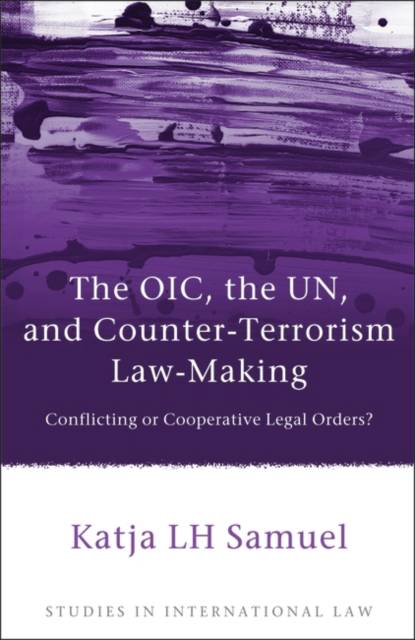
The increasingly transnational nature of terrorist activities compels the international community to strengthen the legal framework in which counter-terrorist activities should occur at the intergovernmental level. This unique and timely book examines one such important intergovernmental organization, the Organization of Islamic Cooperation (OIC - formerly the Organization of the Islamic Conference). In particular, the book analyzes the OIC's institutional counter-terrorist law-making practice, and the relationship between resultant OIC law and comparable UN norms. Furthermore, it explores two common (mis)assumptions regarding the OIC, namely that its internal institutional weaknesses mean that its law-making practice is inconsequential at the intergovernmental level, and that its self-declared Islamic objectives and nature are reflected within OIC law. Where significant normative tensions are discerned between OIC and UN law (for example, the definitional impasse posed by the OIC in relation to the ongoing negotiations of the draft UN Comprehensive Convention on International Terrorism), the book explores not only whether these may be explicable, at least in part, to the OIC's Islamic nature, but also whether their corresponding institutional legal orders are conflicting or cooperative in nature and the resultant implications for the international counter-terrorist framework. The book will appeal to national and intergovernmental counter-terrorist practitioners and policy-makers, and to all scholars interested in the interaction of Islamic norms within the wider international political system. (Series: Studies in International Law- Vol. 48)
Specificaties
Betrokkenen
- Auteur(s):
- Uitgeverij:
Inhoud
- Aantal bladzijden:
- 618
- Taal:
- Engels
- Reeks:
- Reeksnummer:
- nr. 48
Eigenschappen
- Productcode (EAN):
- 9781849462679
- Verschijningsdatum:
- 1/11/2013
- Uitvoering:
- Hardcover
- Formaat:
- Genaaid
- Afmetingen:
- 163 mm x 236 mm
- Gewicht:
- 1065 g


Alleen bij Standaard Boekhandel
+ 593 punten op je klantenkaart van Standaard Boekhandel
CADEAU


Beoordelingen
We publiceren alleen reviews die voldoen aan de voorwaarden voor reviews. Bekijk onze voorwaarden voor reviews.