



Bedankt voor het vertrouwen het afgelopen jaar! Om jou te bedanken bieden we GRATIS verzending (in België) aan op alles gedurende de hele maand januari.
- Afhalen na 1 uur in een winkel met voorraad
- In januari gratis thuislevering in België
- Ruim aanbod met 7 miljoen producten
Bedankt voor het vertrouwen het afgelopen jaar! Om jou te bedanken bieden we GRATIS verzending (in België) aan op alles gedurende de hele maand januari.
- Afhalen na 1 uur in een winkel met voorraad
- In januari gratis thuislevering in België
- Ruim aanbod met 7 miljoen producten





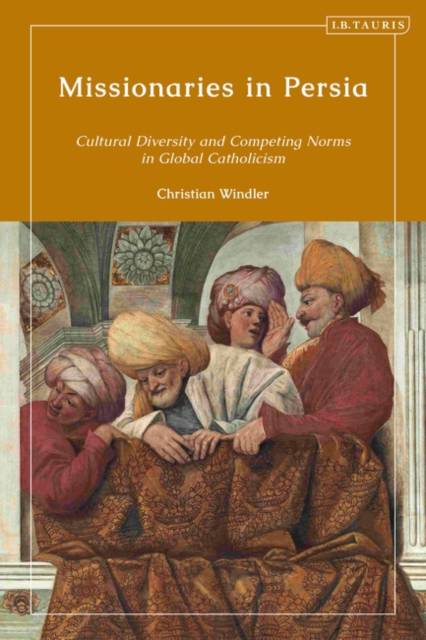
Missionaries in Persia
Cultural Diversity and Competing Norms in Global Catholicism
Christian Windler
Hardcover | Engels
€ 203,95
+ 407 punten
Omschrijving
In the seventeenth and eighteenth centuries, Isfahan, the capital of the Safavid Empire, hosted Catholic missionaries of more diverse affiliations than most other cities in Asia. Attracted by the hope of converting the Shah, the missionaries acted as diplomatic agents for Catholic rulers, hosts to Protestant merchants, and healers of Armenians and Muslims. Through such niche activities they gained social acceptance locally. This book examines the activities of Discalced Carmelites and other missionaries, revealing the flexibility they demonstrated in dealing with cultural diversity, a common feature of missionary activity throughout emerging global Catholicism. While missions all over the world were central to the self-fashioning of the Counter-Reformation Church, clerics who set out to win over souls for the "true religion" turned into local actors who built reputations by defining their social roles in accordance with the expectations of their host society. Such practices fed controversies that were fought out in newly emerging public spaces. Responding to the threat this posed to its authority, the Roman Curia initiated a process of doctrinal disambiguation and centralization which culminated in the nineteenth century. Using the missions to Safavid Iran as a case study for "a global history on a small scale," the book creates a new paradigm for the study of global Catholicism.
Specificaties
Betrokkenen
- Auteur(s):
- Uitgeverij:
Inhoud
- Aantal bladzijden:
- 408
- Taal:
- Engels
Eigenschappen
- Productcode (EAN):
- 9780755649365
- Verschijningsdatum:
- 22/02/2024
- Uitvoering:
- Hardcover
- Formaat:
- Genaaid
- Afmetingen:
- 156 mm x 234 mm
- Gewicht:
- 743 g


Alleen bij Standaard Boekhandel
+ 407 punten op je klantenkaart van Standaard Boekhandel
SOLDEN


Beoordelingen
We publiceren alleen reviews die voldoen aan de voorwaarden voor reviews. Bekijk onze voorwaarden voor reviews.