


- Afhalen na 1 uur in een winkel met voorraad
- Gratis thuislevering in België vanaf € 30
- Ruim aanbod met 7 miljoen producten
- Afhalen na 1 uur in een winkel met voorraad
- Gratis thuislevering in België vanaf € 30
- Ruim aanbod met 7 miljoen producten





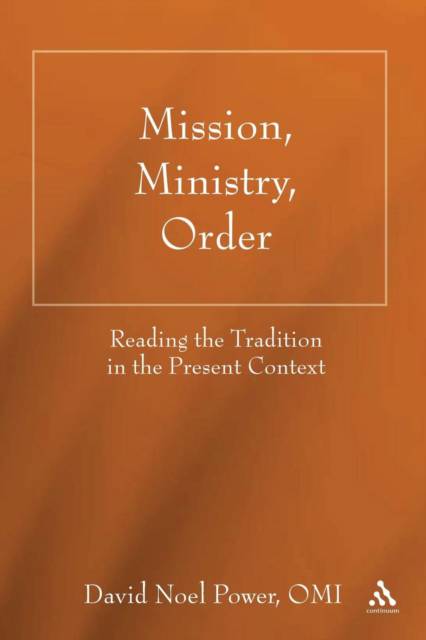
Mission, Ministry, Order
Reading the Tradition in the Present Context
David N Power
Paperback | Engels
€ 93,45
+ 186 punten
Omschrijving
What is the mission of the church? What are the ministries that futher its mission? How should the traditional orders of bishop/overseer, priest/presbyter, and deacon be reconsidered in the light of 21st century challenges and ecumenical unity? These big questions involve a constellation of neuralgic issues both within the Roman Catholic Church and between it and its sister churches, both East and West: women priests, women bishops, married priests, lay ministries, the unaccountability of bishops to their flocks. The rapid decline of priests in the US has led to an enormous number of lay people in leadership positions, but they can't preside at the Eucharist (the heart and soul of Catholic identity and practice), and their roles are nebulous, undefined, and severely constrained. Catholic women are voting with their feet over the church's failure to ordain women. Lay theologians, men and women, now outnumber priest theologians, but have little "standing" in the church outside of academia. Far-reaching agreements on theological issues have been made between Roman Catholicism and Anglicanism and Lutheranism, but the practical consequences (e.g., shared Eucharists) are nil. It is against this background that David Power, the doyen of sacramental theologians in North America, has written a magisterial work on the mission, ministry, and order of the church that is historically comprehensive, theologically progressive, ecumenically and globally focused, and practical in its prescriptions.
Specificaties
Betrokkenen
- Auteur(s):
- Uitgeverij:
Inhoud
- Aantal bladzijden:
- 416
- Taal:
- Engels
Eigenschappen
- Productcode (EAN):
- 9780826428530
- Verschijningsdatum:
- 1/06/2008
- Uitvoering:
- Paperback
- Formaat:
- Trade paperback (VS)
- Afmetingen:
- 167 mm x 233 mm
- Gewicht:
- 598 g



Alleen bij Standaard Boekhandel
+ 186 punten op je klantenkaart van Standaard Boekhandel
CADEAU


Beoordelingen
We publiceren alleen reviews die voldoen aan de voorwaarden voor reviews. Bekijk onze voorwaarden voor reviews.