


- Afhalen na 1 uur in een winkel met voorraad
- Gratis thuislevering in België vanaf € 30
- Ruim aanbod met 7 miljoen producten
- Afhalen na 1 uur in een winkel met voorraad
- Gratis thuislevering in België vanaf € 30
- Ruim aanbod met 7 miljoen producten





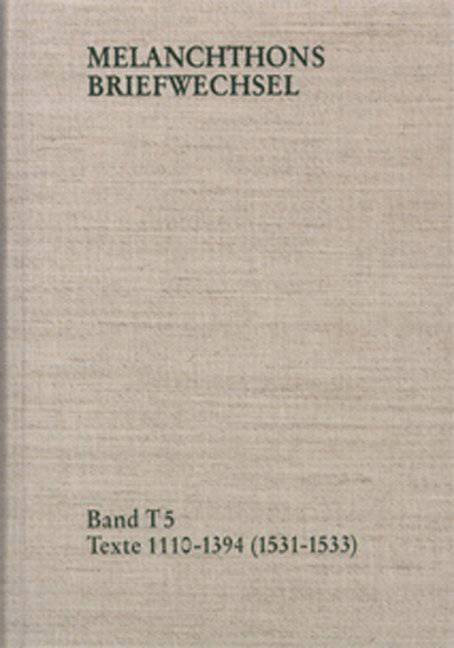
Melanchthons Briefwechsel / Band T 5: Texte 1110-1394 (1531-1533)
Texte 1110-1394 (1531-1533)
Philipp Melanchthon
€ 293,95
+ 587 punten
Omschrijving
300 letters from three years document the variety of Melanchthon's activities and relationships. In the wake of longer absences in the previous years, he rededicated himself predominantly to his teaching duties and published works on rhetoric, dialectic, Aristotelian politics and mathematics. This volume contains the programmatic prefaces to these works. Moreover, Melanchthon had to publish the Augsburg Confession and its Apology. His tireless struggle to find a satisfactory formulation of the doctrine of justification finds echoes in the correspondence of the time. Shortly after the completion of the Apology, Melanchthon published the commentary on Romans (1532), which Melanchthon dedicated to the Archbishop Albert of Mainz. The university professor also continued to concern himself with political questions, chiefly in the form of official opinions. The newly created Smalcaldic League had developed interests in establishing relations with France and England. Remarkable opinions cover such matters as church property and ecclesiastical foundations, the calling of a general council, the treatment of Anabaptists, and the divorce of Henry VIII of England. After Zwingli's death and thanks to Martin Bucer's initiatives, progress was made in clarifying the question at the Lord's Supper. This important volume has been enhanced (in comparison to the digests) with fourteen newly discovered documents. With regard to text-critical matters, this volume includes thirty-five letters to Joachim Camerarius published on the basis of the original manuscripts for the first time.
Specificaties
Betrokkenen
- Auteur(s):
- Uitgeverij:
Inhoud
- Taal:
- Latijn, Duits
- Reeks:
- Reeksnummer:
- nr. 5
Eigenschappen
- Productcode (EAN):
- 9783772820229
- Uitvoering:
- Hardcover
- Formaat:
- Linnen over kaft
- Afmetingen:
- 172 mm x 249 mm
- Gewicht:
- 1370 g


Alleen bij Standaard Boekhandel
+ 587 punten op je klantenkaart van Standaard Boekhandel
CADEAU

AANGERADEN


Beoordelingen
We publiceren alleen reviews die voldoen aan de voorwaarden voor reviews. Bekijk onze voorwaarden voor reviews.