


- Afhalen na 1 uur in een winkel met voorraad
- Gratis thuislevering in België vanaf € 30
- Ruim aanbod met 7 miljoen producten
- Afhalen na 1 uur in een winkel met voorraad
- Gratis thuislevering in België vanaf € 30
- Ruim aanbod met 7 miljoen producten





€ 127,20
+ 254 punten
Omschrijving
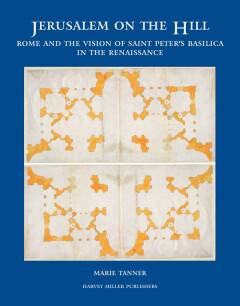
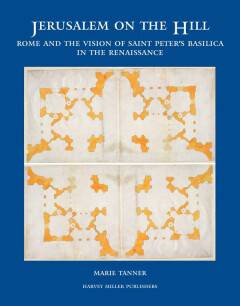
This author analyzes the Renaissance rebuilding of Saint Peter's basilica as a mirror of the political fortunes of the papacy. The project to revitalize the basilica as the center of a resurgent Church proceeded in step with the goal to reassert papal authority across the Italian peninsula, and to extend that authority to the Eastern Mediterranean by mounting a crusade to recover the Holy Land.By embedding references to the Holy Land in the fabric of the new basilica, the architecture itself became the expressive voice of the papacy's political agenda.Peter's tomb provided the fulcrum of a program to transform the basilica, and all of Rome, into a new Jerusalem.As introduced by Nicholas V (1447-1455) and refined by Julius II (1503-1513), these ideas were translated into physical form by Donato Bramante.Drawing inspiration from innovations developed elsewhere in Italy, and with heightened sensitivity for the expressive power of ancient and medieval architecture, he forged a new vocabulary that would transform the entire subsequent history of the built environment.This book is about how that process of transformation was rooted in papal ideology.
Specificaties
Betrokkenen
- Auteur(s):
- Uitgeverij:
Inhoud
- Aantal bladzijden:
- 288
- Taal:
- Engels
- Reeks:
- Reeksnummer:
- nr. 60
Eigenschappen
- Productcode (EAN):
- 9781905375493
- Verschijningsdatum:
- 30/05/2011
- Uitvoering:
- Hardcover
- Formaat:
- Genaaid
- Afmetingen:
- 229 mm x 284 mm
- Gewicht:
- 1655 g


Alleen bij Standaard Boekhandel
+ 254 punten op je klantenkaart van Standaard Boekhandel
Cadeau

AANGERADEN


Beoordelingen
We publiceren alleen reviews die voldoen aan de voorwaarden voor reviews. Bekijk onze voorwaarden voor reviews.