


- Afhalen na 1 uur in een winkel met voorraad
- Gratis thuislevering in België vanaf € 30
- Ruim aanbod met 7 miljoen producten
- Afhalen na 1 uur in een winkel met voorraad
- Gratis thuislevering in België vanaf € 30
- Ruim aanbod met 7 miljoen producten





€ 72,95
+ 145 punten
Uitvoering
Omschrijving
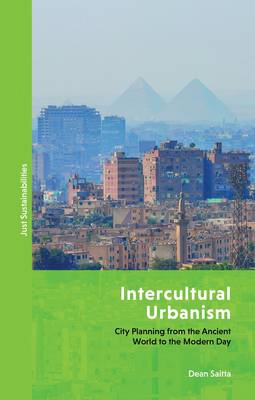
Cities today are paradoxical. They are engines of innovation and opportunity, but they are also plagued by significant income inequality and segregation by ethnicity, race, and class. These inequalities and segregations are often reinforced by the urban built environment: the planning of space and the design of architecture. This condition threatens attainment of wider social and economic prosperity. In this innovative new study, Dean Saitta explores questions of urban sustainability by taking an intercultural, trans-historical approach to city planning.
Saitta uses a largely untapped body of knowledge-the archaeology of cities in the ancient world-to generate ideas about how public space, housing, and civic architecture might be better designed to promote inclusion and community, while also making our cities more environmentally sustainable. By integrating this knowledge with knowledge generated by evolutionary studies and urban ethnography (including a detailed look at Denver, Colorado, one of America's most desirable and fastest growing 'destination cities' but one that is also experiencing significant spatial segregation and gentrification), Saitta's book offers an invaluable new perspective for urban studies scholars and urban planning professionals.
Saitta uses a largely untapped body of knowledge-the archaeology of cities in the ancient world-to generate ideas about how public space, housing, and civic architecture might be better designed to promote inclusion and community, while also making our cities more environmentally sustainable. By integrating this knowledge with knowledge generated by evolutionary studies and urban ethnography (including a detailed look at Denver, Colorado, one of America's most desirable and fastest growing 'destination cities' but one that is also experiencing significant spatial segregation and gentrification), Saitta's book offers an invaluable new perspective for urban studies scholars and urban planning professionals.
Specificaties
Betrokkenen
- Auteur(s):
- Uitgeverij:
Inhoud
- Aantal bladzijden:
- 208
- Taal:
- Engels
- Reeks:
Eigenschappen
- Productcode (EAN):
- 9781786994103
- Verschijningsdatum:
- 24/02/2022
- Uitvoering:
- Paperback
- Formaat:
- Trade paperback (VS)
- Afmetingen:
- 140 mm x 216 mm
- Gewicht:
- 244 g


Alleen bij Standaard Boekhandel
+ 145 punten op je klantenkaart van Standaard Boekhandel
Cadeau

AANGERADEN


Beoordelingen
We publiceren alleen reviews die voldoen aan de voorwaarden voor reviews. Bekijk onze voorwaarden voor reviews.