


- Afhalen na 1 uur in een winkel met voorraad
- Gratis thuislevering in België vanaf € 30
- Ruim aanbod met 7 miljoen producten
- Afhalen na 1 uur in een winkel met voorraad
- Gratis thuislevering in België vanaf € 30
- Ruim aanbod met 7 miljoen producten





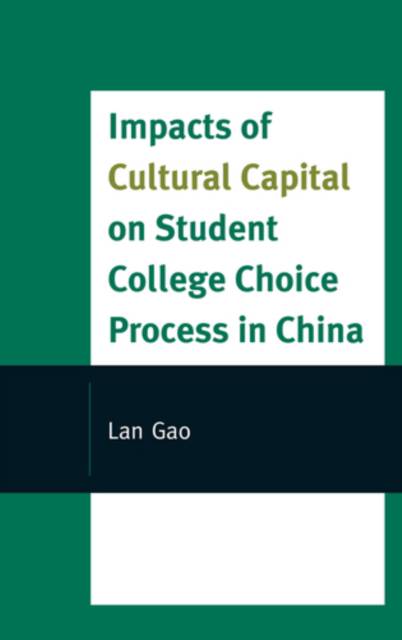
Impacts of Cultural Capital on Student College Choice in China
Lan Gao
€ 220,45
+ 440 punten
Omschrijving
Educational researchers have long been concerned about the factors that influence the patterns of attendance in higher education and the extent to which higher education has been accessible to all students regardless of their socioeconomic status. Extensive research has indicated that a variety of class-related factors, such as cultural capital, social capital, and economic capital, exert remarkable impacts on the amount and type of education that one receives. Drawing on cultural capital theory, this study aims at analyzing how students' college choice process varies by social class in China. By exploring different cultural and financial factors that influence different stages of students' college choice process, this study hopes to contribute to identifying the most appropriate policies and practices for raising the representation of students from the lowest social class among college participants.
Specificaties
Betrokkenen
- Auteur(s):
- Uitgeverij:
Inhoud
- Aantal bladzijden:
- 224
- Taal:
- Engels
- Reeks:
Eigenschappen
- Productcode (EAN):
- 9780739134412
- Verschijningsdatum:
- 1/09/2011
- Uitvoering:
- Hardcover
- Formaat:
- Genaaid
- Afmetingen:
- 155 mm x 231 mm
- Gewicht:
- 498 g


Alleen bij Standaard Boekhandel
+ 440 punten op je klantenkaart van Standaard Boekhandel
Cadeau

AANGERADEN


Beoordelingen
We publiceren alleen reviews die voldoen aan de voorwaarden voor reviews. Bekijk onze voorwaarden voor reviews.