



Je cadeautjes zeker op tijd in huis hebben voor de feestdagen? Kom langs in onze winkels en vind het perfecte geschenk!
- Afhalen na 1 uur in een winkel met voorraad
- Gratis thuislevering in België vanaf € 30
- Ruim aanbod met 7 miljoen producten
Je cadeautjes zeker op tijd in huis hebben voor de feestdagen? Kom langs in onze winkels en vind het perfecte geschenk!
- Afhalen na 1 uur in een winkel met voorraad
- Gratis thuislevering in België vanaf € 30
- Ruim aanbod met 7 miljoen producten





Omschrijving
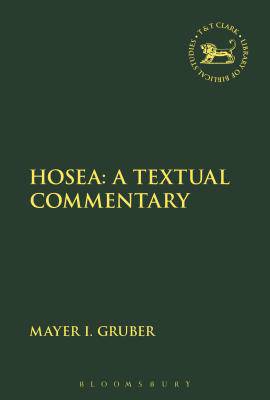
Mayer I. Gruber provides a new commentary on and translation of Hosea. Building upon his work that debunked the myth of sacred prostitution, Gruber now goes on to show that the book of Hosea repeatedly advocates a single standard of marital fidelity for men and women and teaches cheated women to fight back.
Gruber employs the latest and most precise findings of lexicography and poetics to solve the difficulties of the text and to determine both how Hosea can be read and what this means. The translation differs from classical and recent renderings in eliminating forms and expressions, which are neither modern English nor ancient Hebrew. Referring to places, events, and material reality of the 9th and 8th centuries BCE, Gruber uncovers the abiding messages of the heretofore obscure book of Hosea. As in previous studies, Gruber employs the insights of behavioral sciences to uncover forgotten meanings of numerous allusions, idioms, similes, and metaphors. Judicious use is made also of textual history, reception history, and personal voice criticism. One of the least biblical books now speaks more clearly to present and future audiences than it did to many previous audiences.
Gruber employs the latest and most precise findings of lexicography and poetics to solve the difficulties of the text and to determine both how Hosea can be read and what this means. The translation differs from classical and recent renderings in eliminating forms and expressions, which are neither modern English nor ancient Hebrew. Referring to places, events, and material reality of the 9th and 8th centuries BCE, Gruber uncovers the abiding messages of the heretofore obscure book of Hosea. As in previous studies, Gruber employs the insights of behavioral sciences to uncover forgotten meanings of numerous allusions, idioms, similes, and metaphors. Judicious use is made also of textual history, reception history, and personal voice criticism. One of the least biblical books now speaks more clearly to present and future audiences than it did to many previous audiences.
Specificaties
Betrokkenen
- Auteur(s):
- Uitgeverij:
Inhoud
- Aantal bladzijden:
- 680
- Taal:
- Engels
- Reeks:
Eigenschappen
- Productcode (EAN):
- 9780567686442
- Verschijningsdatum:
- 24/01/2019
- Uitvoering:
- Paperback
- Formaat:
- Trade paperback (VS)
- Afmetingen:
- 156 mm x 234 mm
- Gewicht:
- 934 g


Alleen bij Standaard Boekhandel
+ 159 punten op je klantenkaart van Standaard Boekhandel
CADEAU


Beoordelingen
We publiceren alleen reviews die voldoen aan de voorwaarden voor reviews. Bekijk onze voorwaarden voor reviews.