


- Afhalen na 1 uur in een winkel met voorraad
- Gratis thuislevering in België vanaf € 30
- Ruim aanbod met 7 miljoen producten
- Afhalen na 1 uur in een winkel met voorraad
- Gratis thuislevering in België vanaf € 30
- Ruim aanbod met 7 miljoen producten





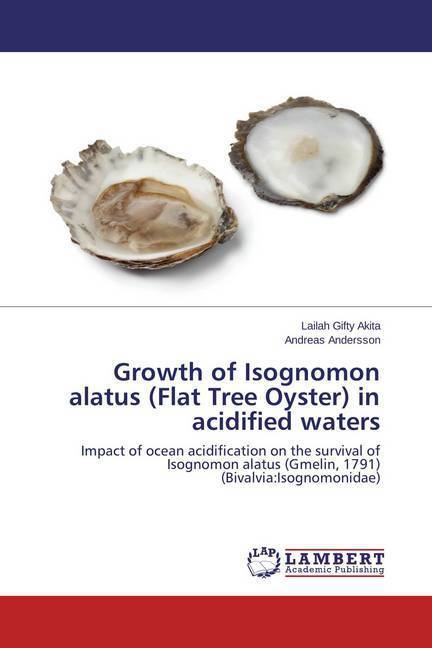
Growth of Isognomon alatus (Flat Tree Oyster) in acidified waters
Impact of ocean acidification on the survival of Isognomon alatus (Gmelin, 1791) (Bivalvia:Isognomonidae)
Lailah Gifty Akita, Andreas Andersson
Paperback | Engels
€ 54,45
+ 108 punten
Eenvoudig bestellen
Veilig betalen


Gratis thuislevering vanaf € 30 (via bpost)
Gratis levering in je Standaard Boekhandel
Omschrijving
The Flat Tress oyster, Isognomon alatus (Gmelin, 1791) is a sessile intertidal bivalve of coastal ecosystem. There is great concern over future effect of ocean acidification (high carbon dioxide concentration, lowering of ocean pH) on calcifying marine organisms (e.g. oysters). We examined how the ocean's present and projected lowering of pH will impact on the growth of Isognomon alatus. Isognomon alatus cultured under laboratory controlled projected 21st century pH levels (~7.8) demonstrated thinning of shell, decrease in weight and negative growth rates (-0.56 + 0.36 mg g-1day-1). In contrast, I. alatus cultured within coastal waters of Mangrove Bay Estuary, Bermuda, under a ambient pH gradient (~8.1) displayed weight gain and positive growth (0.26 + 0.23 mg g-1day-1) although exposure to lower pH levels (~7.4) during low tide. The results indicate the sensitivity of oysters to acidified waters. The book provides understanding on the survival of oysters in acidified coastal waters and mangrove lagoons. The book is useful for oceanographers, biologist, ecologist and environmentalist and aquaculturist.
Specificaties
Betrokkenen
- Auteur(s):
- Uitgeverij:
Inhoud
- Aantal bladzijden:
- 104
- Taal:
- Engels
Eigenschappen
- Productcode (EAN):
- 9783659589867
- Verschijningsdatum:
- 12/12/2014
- Uitvoering:
- Paperback
- Afmetingen:
- 150 mm x 220 mm
- Gewicht:
- 163 g


Alleen bij Standaard Boekhandel
+ 108 punten op je klantenkaart van Standaard Boekhandel
CADEAU

AANGERADEN


Beoordelingen
We publiceren alleen reviews die voldoen aan de voorwaarden voor reviews. Bekijk onze voorwaarden voor reviews.