



Je cadeautjes zeker op tijd in huis hebben voor de feestdagen? Kom langs in onze winkels en vind het perfecte geschenk!
- Afhalen na 1 uur in een winkel met voorraad
- Gratis thuislevering in België vanaf € 30
- Ruim aanbod met 7 miljoen producten
Je cadeautjes zeker op tijd in huis hebben voor de feestdagen? Kom langs in onze winkels en vind het perfecte geschenk!
- Afhalen na 1 uur in een winkel met voorraad
- Gratis thuislevering in België vanaf € 30
- Ruim aanbod met 7 miljoen producten





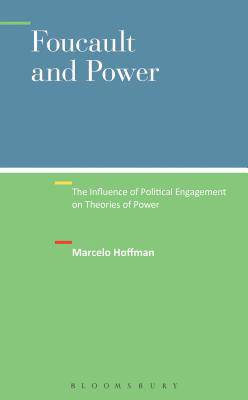
Foucault and Power
The Influence of Political Engagement on Theories of Power
Marcelo Hoffman
Paperback | Engels
€ 88,45
+ 176 punten
Omschrijving
Michel Foucault is one of the most preeminent theorists of power, yet the relationship between his militant activities and his analysis of power remains unclear. The book explores this relationship to explain the development of Foucault's thinking about power.
Using newly translated and unpublished materials, it examines what led Foucault to take on the question of power in the early 1970s and subsequently refine his thinking, working through different models (war and government) and modalities (disciplinary, biopolitical and governmental). Looking at Foucault's political trajectory, from his immersion in the prisoner support movement to his engagements with the Iranian revolution and Solidarity in Poland, the book shows the militant underpinning of his interest in the question of power and its various shifts and mutations.
This thorough account, which includes the first translation of a report edited by Foucault on prison conditions, will provide students in contemporary political theory with a better understanding of Foucault's thinking about power and of the interplay between political activities and theoretical productions.
Using newly translated and unpublished materials, it examines what led Foucault to take on the question of power in the early 1970s and subsequently refine his thinking, working through different models (war and government) and modalities (disciplinary, biopolitical and governmental). Looking at Foucault's political trajectory, from his immersion in the prisoner support movement to his engagements with the Iranian revolution and Solidarity in Poland, the book shows the militant underpinning of his interest in the question of power and its various shifts and mutations.
This thorough account, which includes the first translation of a report edited by Foucault on prison conditions, will provide students in contemporary political theory with a better understanding of Foucault's thinking about power and of the interplay between political activities and theoretical productions.
Specificaties
Betrokkenen
- Auteur(s):
- Uitgeverij:
Inhoud
- Aantal bladzijden:
- 232
- Taal:
- Engels
Eigenschappen
- Productcode (EAN):
- 9781501308284
- Verschijningsdatum:
- 21/05/2015
- Uitvoering:
- Paperback
- Formaat:
- Trade paperback (VS)
- Afmetingen:
- 152 mm x 229 mm
- Gewicht:
- 317 g


Alleen bij Standaard Boekhandel
+ 176 punten op je klantenkaart van Standaard Boekhandel
CADEAU


Beoordelingen
We publiceren alleen reviews die voldoen aan de voorwaarden voor reviews. Bekijk onze voorwaarden voor reviews.