


- Afhalen na 1 uur in een winkel met voorraad
- Gratis thuislevering in België vanaf € 30
- Ruim aanbod met 7 miljoen producten
- Afhalen na 1 uur in een winkel met voorraad
- Gratis thuislevering in België vanaf € 30
- Ruim aanbod met 7 miljoen producten





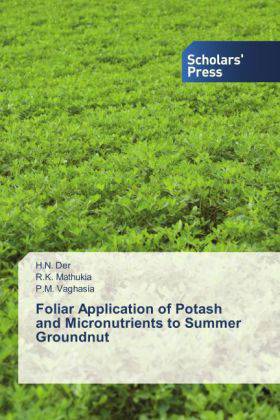
Foliar Application of Potash and Micronutrients to Summer Groundnut
H. N. Der, R. K. Mathukia, P. M. Vaghasia
Paperback | Engels
€ 66,95
+ 133 punten
Omschrijving
Crop fertilization with potassium in rainfed agriculture in India is altogether missing merely on the assumption that Indian soils are rich in potassium and crops do not need external potassium supply. However, under continuous cropping in rainfed regions, most of the crops essentially deplete soil potassium reserves. Balanced fertilization is essential for maximum yields and maintenance of soil fertility. The maximum benefit due to application of N, P, K fertilizers and even secondary nutrients is not obtained in absence of adequate quantities of available micronutrients in the soil. Foliar feeding is often effective when roots are unable to absorb sufficient nutrients from the soil. Such a condition could arise from an infertile soil, a high degree of soil fixation, losses from leaching, cold soil temperatures, a lack of soil moisture, or a restricted, injured, or diseased root system. Foliar feeding has proven of great benefit with new improved selections of some crops in which the roots have lost their inherent capacity to absorb sufficient amounts of some nutrients.
Specificaties
Betrokkenen
- Auteur(s):
- Uitgeverij:
Inhoud
- Aantal bladzijden:
- 144
- Taal:
- Engels
Eigenschappen
- Productcode (EAN):
- 9783639713237
- Verschijningsdatum:
- 17/03/2014
- Uitvoering:
- Paperback
- Afmetingen:
- 150 mm x 220 mm
- Gewicht:
- 222 g


Alleen bij Standaard Boekhandel
+ 133 punten op je klantenkaart van Standaard Boekhandel
Cadeau

AANGERADEN


Beoordelingen
We publiceren alleen reviews die voldoen aan de voorwaarden voor reviews. Bekijk onze voorwaarden voor reviews.