


- Afhalen na 1 uur in een winkel met voorraad
- Gratis thuislevering in België vanaf € 30
- Ruim aanbod met 7 miljoen producten
- Afhalen na 1 uur in een winkel met voorraad
- Gratis thuislevering in België vanaf € 30
- Ruim aanbod met 7 miljoen producten





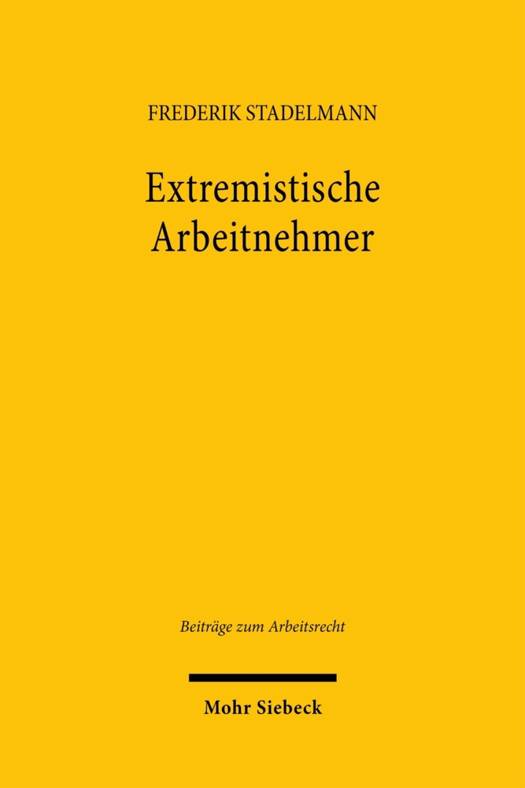
Extremistische Arbeitnehmer
Treuepflichten Des Arbeitnehmers Im Spannungsfeld Politischer Betatigung
Frederik Stadelmann
€ 115,95
+ 231 punten
Omschrijving
English summary: When does an employee with extremist convictions violate the duties of loyalty and consideration arising from the employment relationship? In any event, the employee does not owe a particular political attitude; an extremist attitude therefore does not in itself constitute a breach of duty-it can at most be the cause or motivation for such a breach. Frederik Stadelmann shows that a culpable disruption of industrial peace exists only if the disruption can be normatively attributed to the employee. Through political activity, the employee must not prevent colleagues from performing their work or neglect their own work obligations. The employee likewise acts in breach of duty in cases of physical assaults against colleagues or the employer, as well as in cases of infringements of personal honour or discrimination against colleagues within the meaning of the General Equal Treatment Act (AGG). As a rule, political activity in the context of official contact with the employer's customers or business partners is impermissible. By contrast, a mere violation of general moral standards does not yet amount to misconduct; political correctness is not owed. Where the employee acts outside working hours, the decisive factor is whether their conduct, insofar as it relates to the employment relationship, impairs the employer's legitimate interests. Finally, the author discusses the requirements for termination by the employer on the grounds of the employee's politically extremist activities. German description: Wann verstosst ein Arbeitnehmer mit extremistischer Gesinnung gegen Treue- und Rucksichtnahmepflichten aus dem Arbeitsverhaltnis? Eine bestimmte politische Gesinnung schuldet er jedenfalls nicht; eine extremistische Gesinnung stellt daher selbst keine Pflichtverletzung dar - sie kann hochstens Ursache oder Motivation fur eine solche sein. Frederik Stadelmann arbeitet heraus, dass eine pflichtwidrige Storung des Betriebsfriedens nur dann vorliegt, wenn dem Arbeitnehmer die Storung normativ zugerechnet werden kann. Durch seine politische Betatigung darf der Arbeitnehmer Kollegen nicht von der Erbringung ihrer Arbeitsleistung abhalten oder seine eigene Arbeitsverpflichtung vernachlassigen. Auch bei Tatlichkeiten gegen Kollegen oder den Arbeitgeber sowie bei Ehrverletzungen oder Diskriminierung von Kollegen im Sine des AGG handelt der Arbeitnehmer pflichtwidrig. Grundsatzlich unzulassig ist politische Betatigung im Rahmen des dienstlichen Kontakts zu Kunden oder Geschaftspartnern des Arbeitgebers. Ein blosser Verstoss des Arbeitnehmers gegen allgemeine Moralvorstellungen bedeutet hingegen noch keine Pflichtwidrigkeit; politische Korrektheit ist nicht geschuldet. Handelt der Arbeitnehmer ausserdienstlich, so ist ausschlaggebend, ob er mit seinem im Bezug zum Arbeitsverhaltnis stehenden Verhalten die berechtigten Interessen des Arbeitgebers beeintrachtigt. Abschliessend erortert Autor die Voraussetzungen einer Kundigung durch den Arbeitgeber wegen politisch extremistischer Betatigung des Arbeitnehmers.
Specificaties
Betrokkenen
- Auteur(s):
- Uitgeverij:
Inhoud
- Aantal bladzijden:
- 380
- Taal:
- Duits
- Reeks:
Eigenschappen
- Productcode (EAN):
- 9783162002266
- Verschijningsdatum:
- 31/03/2026
- Uitvoering:
- Hardcover
- Formaat:
- Genaaid
- Afmetingen:
- 155 mm x 231 mm
- Gewicht:
- 394 g



Alleen bij Standaard Boekhandel
+ 231 punten op je klantenkaart van Standaard Boekhandel
AANGERADEN


Beoordelingen
We publiceren alleen reviews die voldoen aan de voorwaarden voor reviews. Bekijk onze voorwaarden voor reviews.